
Therobatinae
Muma, 1951
Genus Guides
3- Chanbria(camel spiders)
- Eremochelis
- Hemerotrecha(windscorpion)
Therobatinae is a of solifuges (sun spiders or camel spiders) within the Eremobatidae. Established by Muma in 1951, it comprises approximately 9 and 90+ distributed primarily in arid regions of North America. Members of this subfamily are characterized by specific morphological features of the and that distinguish them from the other eremobatid subfamily, Eremobatinae. The group is predominantly and occupies desert and semi-desert .
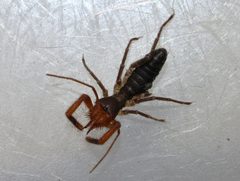
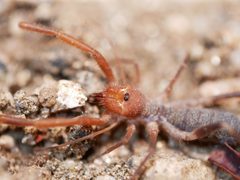
Pronunciation
How to pronounce Therobatinae: //ˌθɛroʊˈbæ.tɪˌni//
These audio files are automatically generated. While they are not always 100% accurate, they are a good starting point.
Identification
Therobatinae can be distinguished from Eremobatinae by the structure of the on the male : Therobatinae possess a row of setae on the flagellum, whereas Eremobatinae lack this feature. Additional diagnostic characters include the shape and of the cheliceral fingers and specific arrangements of spines on the . These features require microscopic examination for reliable identification.
Images
Habitat
Arid and semi-arid environments including deserts, scrublands, and dry grasslands. are found in sandy, rocky, and gravelly substrates. Many occupy rodent burrows, rock crevices, or self-constructed temporary shelters under surface debris.
Distribution
North America, primarily the western United States and northern Mexico. Range extends from the Pacific Coast eastward to the Great Plains, and from southern Canada through the Mojave, Sonoran, and Chihuahuan deserts.
Seasonality
Activity peaks during warmer months (spring through fall), with most becoming or less active during winter. surface activity increases following summer rains.
Ecological Role
of small arthropods in desert . May contribute to soil turnover through burrowing activities.
Similar Taxa
- EremobatinaeThe other of Eremobatidae; distinguished by absence of flagellar setae and differences in cheliceral .
More Details
Taxonomic history
Therobatinae was erected by Muma (1951) to accommodate previously placed in Eremobatidae that showed consistent differences in male cheliceral structure. The has been stable in composition, though generic boundaries have been revised.