
Eremobates
Banks, 1900
sun spiders, camel spiders, wind scorpions
Species Guides
14- Eremobates ajoanus(windscorpion)
- Eremobates angustus(windscorpion)
- Eremobates bixleri(windscorpion)
- Eremobates corpink(Coral Pink Sand Dunes Straight-faced Windscorpion)
- Eremobates gerbae(windscorpion)
- Eremobates icenogelei(camel spider)
- Eremobates inkopansis(solifuge)
- Eremobates kiseri(windscorpion)
- Eremobates norrisi(windscorpion)
Eremobates is a of solifuges (sun spiders/camel spiders) in the Eremobatidae, distributed primarily in western North America. These fast-moving arachnids are notable for having the largest jaw-to-body ratio of any animal. They are non-venomous that rely on powerful to subdue prey. Most are and navigate primarily using their rather than vision. The genus contains approximately 97 accepted species.
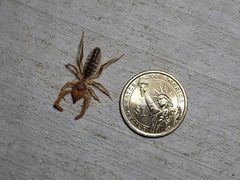
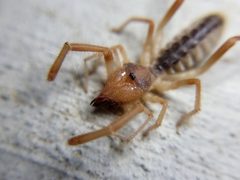
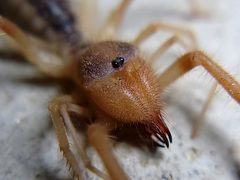
Pronunciation
How to pronounce Eremobates: /ˌɛrɪˈmoʊˌbeɪtiːz/
These audio files are automatically generated. While they are not always 100% accurate, they are a good starting point.
Identification
Solifuges in the Eremobates can be distinguished from other solifuge genera by a combination of cheliceral patterns, flagellar structure on the male , and tarsal segmentation. Members of this genus typically have robust, heavily sclerotized chelicerae with distinctive tooth arrangements. Accurate identification to level requires examination of male flagellar complex and female genital , often necessitating microscopic examination.
Images
Habitat
Arid and semi-arid environments including deserts, dry grasslands, and scrublands. are typically found in sandy or loose soil substrates where they can construct temporary shelters or burrows. Often associated with rocky outcrops, dry washes, and desert pavement in the southwestern United States and northern Mexico.
Distribution
Western United States, extending from southwestern Canada through the western states and into northern Mexico. The shows highest diversity in the desert regions of the American Southwest.
Diet
Voracious of small arthropods including insects, other arachnids, and various . Prey is captured and killed using powerful rather than venom.
Life Cycle
Development proceeds from through multiple nymphal instars to . Females deposit clutches of 50–200 eggs in burrows excavated in soil. In at least some , females exhibit maternal care, remaining with eggs and young until offspring are capable of hunting and self-defense. Post-embryonic development involves successive between instars.
Behavior
Primarily hunters with poor eyesight; navigation and prey detection accomplished largely through sensory . Solitary except during mating. Males use modified pedipalps to transfer seminal fluid to females during courtship, which involves complex behavioral sequences. Fast-moving and capable of rapid bursts of speed when pursuing prey or escaping threats. Some observations suggest potential clipping of mammalian hair for nest lining, though this remains poorly documented.
Ecological Role
Significant in arid , contributing to regulation of . Their non-venomous strategy and large size relative to other desert arthropods makes them notable components of desert .
Human Relevance
Occasionally encountered by humans in desert regions, sometimes generating alarm due to large size, rapid movement, and formidable . Despite fearsome appearance, they are harmless to humans—lacking venom and typically avoiding contact. Bites can occur if handled but are mechanically painful rather than medically significant. Beneficial in controlling of other arthropods, including some pest .
Similar Taxa
- AmmotrechaAnother of Eremobatidae found in similar ; distinguished by differences in cheliceral and male flagellar structure
- SolpugaOld World solifuge superficially similar in habitus; distinguished by geographic distribution and detailed morphological features of and
Misconceptions
Despite like 'camel spider' and persistent urban legends (particularly among military personnel), Eremobates are not venomous, do not chase humans, and do not feed on camel stomachs or sleeping soldiers. Their large jaws are used for on small arthropods, not for attacking vertebrates. Claims of them running at 30 mph or making screaming noises are exaggerated or fabricated.
Sources and further reading
- BugGuide
- Wikipedia
- iNaturalist taxon
- NCBI Taxonomy
- Catalogue of Life
- Insect FAQs | Entomology Research Museum
- Bug Eric: New Mexico Dragonfly Blitz - Day 1
- Acanthaceae | Beetles In The Bush
- The Life Cycle of Eremobates durangonus (Arachnida: Solpugida)
- Mating behaviour in the solpugid genus Eremobates banks
- Mating behaviour of Eremobates pallipes (Say, 1823) (Arachnida: Solifugae: Eremobatidae)
- Notes on the feeding behavior and oviposition of a captive American false spider. (Eremobates formicaria Koch).
- Microhabitat Utilisation, Diet Composition, Intraguild Predation, and Diel Periodicity in Five Sympatric Species of Desert Arachnids: a Wolf Spider (Hogna carolinensis), Tarantula Spider (Aphonopelma steindachneri), Solifuge (Eremobates palpisetulosus), Giant Whipscorpion (Mastigoproctus giganteus), and Scorpion (Diplocentrus bigbendensis)