
Pseudouroctonus reddelli
(Gertsch & Soleglad, 1972)
Texas Cave Scorpion
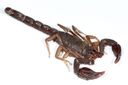
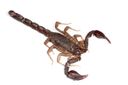
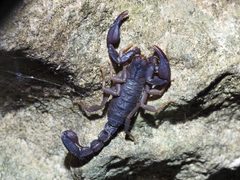
Pseudouroctonus reddelli, commonly known as the Texas Cave , is a troglobitic scorpion first described in 1972. It belongs to the Vaejovidae and is to cave systems in Texas. The species exhibits classic cave-adapted traits including reduced pigmentation and elongated appendages. As a specialized cave dweller, it represents an important component of subterranean biodiversity in the karst regions of central Texas.
Pronunciation
How to pronounce Pseudouroctonus reddelli: //ˌsuːdəʊˌʊrəˈktəʊnəs ˈrɛdɛli//
These audio files are automatically generated. While they are not always 100% accurate, they are a good starting point.
Identification
Distinguished from other Pseudouroctonus by its exclusive association with cave , troglomorphic (elongated legs, reduced , pale coloration), and restricted geographic distribution in Texas cave systems. Differs from surface-dwelling such as P. sprousei and P. apacheanus by lack of dark pigmentation and eye reduction. Molecular data may be required for definitive identification due to morphological convergence among cave scorpions.
Images
Appearance
Exhibits troglomorphic adaptations typical of cave-dwelling scorpions: reduced or absent pigmentation resulting in pale yellowish to translucent coloration, elongated and legs relative to body size, and reduced or absent . Body slender with delicate structure compared to surface-dwelling relatives. (stinger) and metasoma present but proportionally slender.
Habitat
Strictly troglobitic; inhabits limestone cave systems and karst formations. Found in dark, humid cave environments including twilight zones and deeper recesses. Requires stable temperature and high humidity conditions typical of subterranean . Associated with cave streams, pools, and moist rock surfaces.
Distribution
to Texas, USA. Documented from cave systems in central Texas karst region, including Bexar County and surrounding areas. Distribution restricted to specific cave formations within the Edwards Plateau and related karst geologies.
Seasonality
Active year-round within cave environments where temperature remains stable. Surface activity not observed due to troglobitic lifestyle.
Behavior
within cave environment; activity patterns influenced by prey availability rather than . Movement slow and deliberate, typical of cave scorpions. Likely ambush using elongated to capture prey in confined cave spaces.
Ecological Role
in subterranean ; contributes to nutrient cycling within cave . As a specialized troglobite, serves as for cave ecosystem health and groundwater quality.
Human Relevance
Subject of conservation concern due to vulnerability; cave systems threats from urbanization, groundwater pollution, and direct disturbance. Scientific interest in evolutionary studies of cave . No documented medical or economic significance.
Similar Taxa
- Pseudouroctonus sprouseiSurface-dwelling with dark pigmentation and fully developed ; found in similar geographic region but in surface
- Pseudouroctonus apacheanusSurface-dwelling relative with typical pigmentation and development; ecologically and morphologically distinct
- Troglocryptus speciesOther troglobitic scorpions in Texas caves; may share convergent troglomorphic traits requiring molecular differentiation
More Details
Taxonomic History
Originally described as Vaejovis reddelli by Gertsch & Soleglad in 1972, later transferred to Pseudouroctonus based on phylogenetic revisions of the Vaejovidae.
Conservation Status
Vulnerable due to restricted range and specific requirements; individual cave may be isolated and subject to local extinction from habitat disturbance.