
Vaejovis
C.L. Koch, 1836
Species Guides
8- Vaejovis carolinianus(southern unstriped scorpion)
- Vaejovis cashi(Cash's Scorpion)
- Vaejovis chisos
- Vaejovis deboerae
- Vaejovis intermedius(Intermediate Scorpion)
- Vaejovis lapidicola
- Vaejovis paysonensis
- Vaejovis vorhiesi(Vorhies' Scorpion)
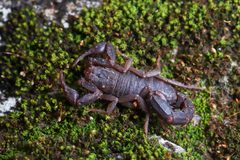
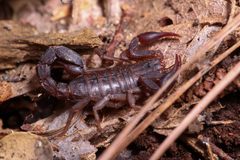
Vaejovis is a of scorpions in the Vaejovidae containing approximately 75 as of 2024. Species range from some of the smallest scorpions in North America (under 19 mm) to larger desert forms exceeding 60 mm. The genus is divided into three recognized species groups: "mexicanus", "vorhiesi", and "nitidulus+nigrescens". Many species are restricted to isolated mountain , particularly in the Sky Islands of the southwestern United States.

Pronunciation
How to pronounce Vaejovis: //vaɪ.ˈdʒoʊ.vɪs//
These audio files are automatically generated. While they are not always 100% accurate, they are a good starting point.
Identification
The is characterized by morphological features that distinguish it from other vaejovid genera, though specific diagnostic characters vary by group. The "mexicanus" group is distinguished from the "vorhiesi" and "nitidulus+nigrescens" groups by specific morphological characters used in taxonomic keys. Species-level identification typically requires examination of , metasomal segment proportions, and other subtle morphological features, often supplemented with molecular data.
Images
Habitat
Most smaller in the American Southwest are restricted to higher elevations, commonly in pine forests between 1,500-2,900 m. Some species occupy chaparral . The includes species adapted to montane forests, desert mountains, and isolated sky island habitats. Retreat sites typically include spaces under rocks and other cover objects.
Distribution
Range extends from central Mexico through mountains in the southwestern United States (Texas, New Mexico, Arizona). One , Vaejovis carolinianus, occurs in the Appalachian region of the southeastern United States. Many species have highly restricted distributions associated with isolated mountain ranges.
Human Relevance
Venom is relatively weak and of no medical importance, though stings from larger can be painful. Some species occur near metropolitan areas, including within sight of Tucson, Arizona.
Similar Taxa
- Other Vaejovidae generaVaejovis is distinguished from related by specific morphological characters; the three groups within Vaejovis are differentiated by taxonomic keys based on morphological features.
More Details
Species diversity
As of 2024, the contains 75 with 21 occurring in the United States. The number of Arizona mountain species has more than doubled from 4 to 10 over the past six years, all belonging to Vaejovis.
Research activity
Active taxonomic research continues, with multiple new described in recent years including V. brysoni from the Santa Catalina Mountains and V. grayae from chaparral near Yarnell, Arizona.
Conservation relevance
Many have restricted distributions on isolated mountain (Sky Islands), making them potentially vulnerable to habitat fragmentation and climate change effects on montane .
Sources and further reading
- BugGuide
- Wikipedia
- GBIF taxonomy match
- iNaturalist taxon
- NCBI Taxonomy
- Catalogue of Life
- Meet Awesome Annie, the Scorpion, at UC Davis Biodiversity Museum Day | Bug Squad
- Diversity of Arachnids to be Showcased at Briggs Hall During UC Davis Picnic Day | Bug Squad
- New scorpion discovery near metropolitan Tucson, Arizona | Blog
- Pensoft blog - Part 147
- Retreat Site Selection in Vaejovis carolinianus Populations of Tennessee’s Upper Cumberland Region
- Aggregation tendencies of a female Vaejovis carolinianus population on France mountain, Tennessee
- A new species of Vaejovis from chaparral habitat near Yarnell, Arizona (Scorpiones: Vaejovidae)
- Reproduction and birth in the “vorhiesi” group of the genus Vaejovis (Scorpiones: Vaejovidae). Part I. Clutch size
- Taxonomic revision of the “mexicanus” group of the genus Vaejovis C. L. Koch, 1836 (Scorpiones: Vaejovidae)