
Pseudouroctonus
Stahnke, 1974
Species Guides
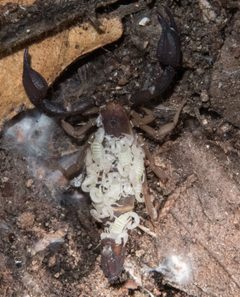
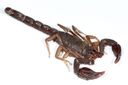
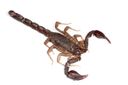
4Pseudouroctonus is a of vaejovid scorpions established by H. L. Stahnke in 1974. The genus contains approximately 20 distributed across the drylands and mountains of western North America. Members of this genus are notable for their stenotopic requirements and have been subject to recent taxonomic revision using molecular methods, which has revealed substantial cryptic diversity. The genus includes the P. minimus complex, a group whose diversification patterns have been used to study the relative impacts of pre-Quaternary tectonics versus Pleistocene climate change on speciation.
Pronunciation
How to pronounce Pseudouroctonus: //ˌsuːˌdoʊˌʊrˈɒktənəs//
These audio files are automatically generated. While they are not always 100% accurate, they are a good starting point.
Identification
within Pseudouroctonus are morphologically similar to other vaejovid scorpions, requiring careful examination for definitive identification. -based methods have proven essential for distinguishing cryptic species, as morphological convergence is common. The P. minimus complex in particular shows extensive geographical structure that is not readily apparent from external alone. Identification to species level typically requires examination of and comparison with described diagnostic characters.
Images
Habitat
in this occupy dryland and mountainous environments of western North America. The P. minimus complex exhibits stenotopic requirements, being restricted to specific geological formations and elevational zones. Some species are associated with rocky substrates in montane regions, while others occur in desert scrub and grassland . The ancestral area for the genus has been reconstructed as spanning California and the Mexican Highlands.
Distribution
Western North America, including the southwestern United States and Mexico. The ranges from California across the Sierra Nevada and associated mountain ranges, extending southward into the Mexican Highlands and Chihuahuan Desert. Specific distribution patterns vary by , with some showing highly restricted ranges.
Similar Taxa
- ParuroctonusBoth are vaejovid scorpions found in western North America with similar general body plans; however, Paruroctonus includes playa adapted to alkaline basin , whereas Pseudouroctonus are typically associated with rocky upland and montane environments.
- UroctonusHistorical taxonomic confusion existed between these ; Pseudouroctonus was erected to accommodate previously misplaced in Uroctonus, with differences in and metasomal segment serving as distinguishing features.
More Details
Taxonomic history
The was erected by Stahnke in 1974, with additional described by Stockwell in 1992. Recent work by Savary and Bryson using sequences has revealed that morphologically similar species can be genetically divergent, leading to the description of new species such as P. maidu from the Sierra Nevada foothills in 2016.
Evolutionary significance
The P. minimus complex has served as a model system for studying the relationship between Earth history and biological diversification. Phylogeographic analyses indicate that Miocene and Pliocene geomorphology, potentially in concert with climate change, drove divergence across the heterogeneous landscape of southwestern North America, with most divergence events occurring over 5 million years ago.
Sources and further reading
- BugGuide
- Wikipedia
- GBIF taxonomy match
- iNaturalist taxon
- NCBI Taxonomy
- Catalogue of Life
- fauna | Blog - Part 8
- California | Blog
- Scorpion | Blog
- arachnids | Blog - Part 2
- wildlife | Blog - Part 3
- California Academy of Sciences | Blog
- Biogeography of scorpions in thePseudouroctonus minimuscomplex (Vaejovidae) from south‐western North America: implications of ecological specialization for pre‐Quaternary diversification