
Superstitioniidae
Stahnke, 1940
Genus Guides
1Superstitioniidae is a of scorpions containing only the Superstitionia and its sole , Superstitionia donensis. The family is to the southwestern United States and northwestern Mexico, where it inhabits rocky desert environments. It was established by Stahnke in 1940 and represents one of the most taxonomically restricted lineages within Scorpiones.
Pronunciation
How to pronounce Superstitioniidae: //ˌsuː.pərˌstɪˈʃoʊ.ni.aɪˌdiː//
These audio files are automatically generated. While they are not always 100% accurate, they are a good starting point.
Identification
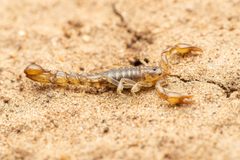
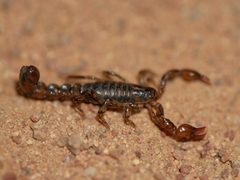
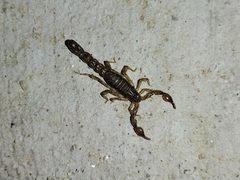
Superstitioniidae is distinguished from other by a combination of morphological features including a reduced number of pectinal teeth (7-9 in males, 6-8 in females) and a characteristic trichobothrial pattern on the . The family is further distinguished by the presence of a subaculear tooth on the . These traits, combined with its restricted geographic range, help separate it from the superficially similar Vaejovidae and Buthidae families in the same region.
Images
Habitat
Rocky desert , particularly in mountainous and canyon regions with sufficient moisture retention. Found under stones and in crevices within igneous and metamorphic rock formations. Associated with Madrean sky island and Sonoran Desert .
Distribution
Southwestern United States (Arizona, southeastern California, southwestern New Mexico) and northwestern Mexico (Sonora, Baja California).
Similar Taxa
- VaejovidaeOverlaps in geographic range and general body form; distinguished by higher pectinal tooth counts (typically 12-24) and different trichobothrial patterns.
- ButhidaeOccurs in similar desert ; distinguished by more slender , different metasomal segment proportions, and generally higher pectinal tooth counts.
More Details
Taxonomic restriction
Superstitioniidae is one of only a few within Scorpiones, making it a significant lineage for studies of and diversification. The extreme taxonomic restriction suggests either a relictual distribution or highly specialized ecological requirements.