
Trogulus
Latreille, 1802
harvestmen
Species Guides
1- Trogulus tricarinatus(Harvestman)
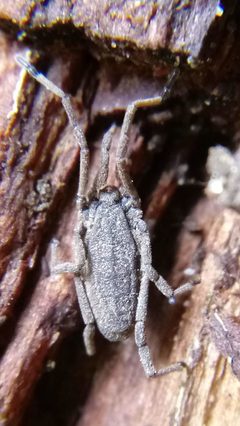
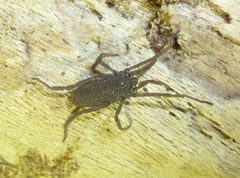
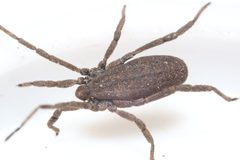
Trogulus is a of harvestmen (Opiliones) in the Trogulidae, characterized by large, elongated and flattened bodies with relatively short legs. The genus contains the largest known harvestman by body length, Trogulus torosus. -level identification is difficult due to highly uniform external across the genus, necessitating molecular and morphometric approaches for . The genus exhibits unexpectedly high cryptic diversity, with molecular estimates suggesting three times more species than currently described.
Pronunciation
How to pronounce Trogulus: //ˈtɹɒɡ.jʊ.ləs//
These audio files are automatically generated. While they are not always 100% accurate, they are a good starting point.
Identification
Distinguished from other Trogulidae by the two-segmented on leg II. -level identification is challenging due to uniform external ; reliable differentiation requires morphometric data, male genital morphology, and molecular markers (28S rRNA and b gene sequences). Species groups defined by distributions and subtle morphological differences in size, palp papillation, leg , and body papillation pattern.
Images
Habitat
Occurs in a range of , most common in forests where prey is abundant. Western Mediterranean groups occupy regions shaped by Miocene and Pliocene geological processes.
Distribution
Primarily European, with highest diversity in the western Mediterranean region (Iberian Peninsula, Balearic Islands, Pyrenees, southern France, Italy). are allopatrically distributed within species groups.
Diet
Snails are the primary prey.
Ecological Role
of snails in forest . Potential value for biogeographic studies due to distribution patterns corresponding to Miocene and Pliocene geological events.
Similar Taxa
- Other Trogulidae generaTrogulus distinguished by two-segmented on leg II; other have different tarsal segmentation
- Other harvestmen generaFlattened body form and short legs differ from more typical harvestman with rounded bodies and long, slender legs
More Details
Cryptic diversity
Molecular studies estimate the contains three times more than currently described due to morphological uniformity masking genetic divergence.
Species group systematics
Seven morphological groups defined, but genetic analysis indicates two are : the T. torosus group (with T. hirtus group nested within) and the T. gypseus group (containing T. tricarinatus group).
Taxonomic challenges
The Trogulus coriziformis -group was revised using combined molecular (~1700 28S rRNA and b), distributional, morphometric and morphological data, demonstrating that molecular approaches are essential for resolving species boundaries.