
Trogulus tricarinatus
(Linnaeus, 1767)
Harvestman
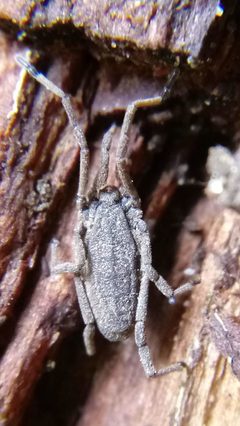
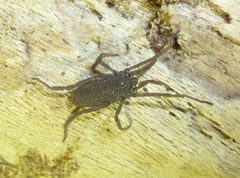
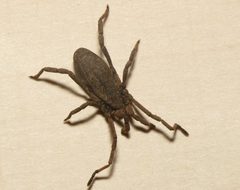
Trogulus tricarinatus is a small harvestman native to Europe that has been introduced to North America. measure 7–9 mm in body length with short, robust legs. The species is notable for its flattened, narrow body and distinctive ecological habit of feeding on snails and laying in empty shells. It is slow-moving and typically found in leaf litter in calcareous areas.
Pronunciation
How to pronounce Trogulus tricarinatus: /ˈtroː.ɡu.lus ˌtrɪ.kæ.rɪˈneɪ.təs/
These audio files are automatically generated. While they are not always 100% accurate, they are a good starting point.
Identification
Distinguished from the smaller Anelasmocephalus cambridgei by larger size (7–9 mm vs. smaller in A. cambridgei) and morphological features. The flattened, narrow body and short, robust legs with distinctive segmentation pattern aid identification. Invisible openings are a notable trait.
Images
Habitat
Calcareous areas, typically in leaf litter
Distribution
Widespread in Europe excluding Scandinavia; introduced to North America. Rare in Britain, restricted mainly to southern regions.
Diet
Feeds on snails, insects, and earthworms
Life Cycle
specimens pass through six moults over a period of up to nine months before reaching adulthood. are laid in empty snail shells.
Behavior
Moves slowly; typically covered in particles of dirt, which may serve as camouflage
Ecological Role
of snails, insects, and earthworms; may contribute to nutrient cycling in leaf litter
Similar Taxa
- Anelasmocephalus cambridgeiSimilar but smaller in size