
Taracus marchingtoni
Shear, 2016
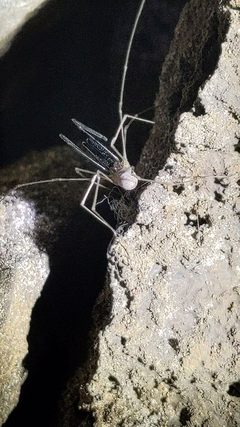
Taracus marchingtoni is a troglobiotic harvestman to lava caves in central Oregon. First collected in 1965 but not formally described until 2016, it exhibits classic cave-adapted traits including reduced and depigmentation. The species is notable for its extremely elongated , which in males can exceed body length. It has been documented feeding on troglophilic millipedes.

Pronunciation
How to pronounce Taracus marchingtoni: /ˈtærəkəs ˌmɑːrkɪŋˈtoʊni/
These audio files are automatically generated. While they are not always 100% accurate, they are a good starting point.
Identification
Distinguished from other Taracus by the extreme elongation of the , particularly in males where they may reach nearly three times the body length. The combination of troglobiotic features (reduced , white coloration) and the specific cave in central Oregon further supports identification. The type locality at Lava River Cave and association with Newberry Volcano region are diagnostic.
Images
Habitat
Lava caves in semi-arid and arid regions; troglobiotic existence in subterranean volcanic cave systems. The shows specific to the stable, dark, humid conditions of lava tube caves.
Distribution
to central Oregon, USA; known from lava caves in the vicinity of Newberry Volcano, specifically Lava River Cave in Deschutes County. Distribution records indicate presence in Deschutes and Lake counties.
Diet
Has been observed feeding on small troglophilic millipedes identified as Plumatyla humerosa ( Conotylidae)
Host Associations
- Plumatyla humerosa - preyTroglophilic documented as prey item
Behavior
Troglobiotic; exhibits cave-adapted with reduced activity in light conditions. Specific behavioral details beyond feeding observation are not documented.
Ecological Role
within cave ; represents a specialized troglobitic component of the subterranean in central Oregon lava caves
Human Relevance
Named in honor of Neil Marchington, an amateur biologist and cave conservancy member who collected the specimens leading to its formal description. The highlights the unique biodiversity of Oregon's cave systems and the importance of cave conservation efforts.
Similar Taxa
- Other Taracus speciesShare Taracidae and Taracus but differ in cheliceral proportions and geographic distribution; most Taracus are not troglobitic
- Trogloraptor marchingtoniShares specific epithet and cave in Oregon, but belongs to entirely different order (Araneae vs. Opiliones) and is a spider with distinctive sickle-like claws rather than a harvestman with elongated
More Details
Taxonomic history
First collected by Jean and Wilton Ivie in 1965 from Lava River Cave, but remained unidentified until Neil Marchington collected additional specimens in 2008, leading to formal description by Shear in 2016
Conservation context
As a troglobitic with restricted range, potentially vulnerable to cave disturbance, groundwater , and surface development affecting subterranean