
Taracidae
Schönhofer, 2013
Taracid Harvestmen
Genus Guides
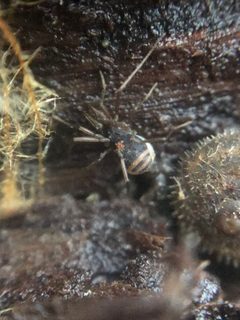
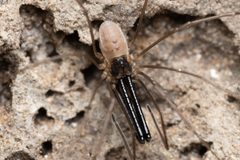
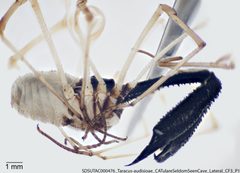
4Taracidae is a of harvestmen (Opiliones) established by Schönhofer in 2013, containing four and 23 described . The family includes the genera Taracus, Oskoron, Hesperonemastoma, and Crosbycus, though the placement of the latter two remains taxonomically disputed. Members are primarily distributed in western North America, with some species exhibiting troglomorphic adaptations suggesting cave-dwelling habits.
Pronunciation
How to pronounce Taracidae: /tæˈræsɪdiː/
These audio files are automatically generated. While they are not always 100% accurate, they are a good starting point.
Identification
Taracidae can be distinguished from other ischyropsalidoid by morphological features supporting their placement in the superfamily Ischyropsalidoidea. The Taracus is characterized by with relatively long legs and specific . Oskoron species differ from Taracus in cheliceral structure and other somatic features. Hesperonemastoma and Crosbycus share some characteristics with the core Taracidae but their familial placement is contested; they may represent a distinct undescribed family.
Images
Habitat
in this occupy moist, sheltered microhabitats in western North America. Several species, particularly within Hesperonemastoma and some Taracus, have been collected from caves and show troglomorphic traits such as reduced pigmentation and elongated appendages. The Oskoron occurs in forested areas of Oregon and Washington. Specific associations for many species remain poorly documented.
Distribution
Western North America, including the Canadian provinces of Alberta and British Columbia, and the US states of Washington, Oregon, Idaho, Montana, Wyoming, Utah, Nevada, California, and New Mexico. The Taracus has the broadest distribution, with Oskoron restricted to the Pacific Northwest. New locality records from 2016 extended the known range into previously unreported states and provinces.
Human Relevance
Some , particularly cave-dwelling forms, are of interest to biologists studying subterranean dynamics and troglomorphic evolution. The has no documented economic or medical importance.
Similar Taxa
- IschyropsalididaeAlso placed in superfamily Ischyropsalidoidea; Taracidae distinguished by genetic and morphological data supporting Schönhofer's 2013 -level revision
- CeratolasmatidaeAnother in Ischyropsalidoidea; Taracidae generally lack the pronounced cheliceral modifications seen in some ceratolasmatids
More Details
Taxonomic Controversy
The familial placement of Crosbycus and Hesperonemastoma remains unresolved. Some researchers do not consider these to belong in Taracidae, but no alternative has yet been erected for them. The two additional described by Roewer in 1951 (Crosbycus goodnighti and Crosbycus speluncarum) are considered dubious due to unclear identity of the type material.