
Taracus
Simon, 1879
Species Guides
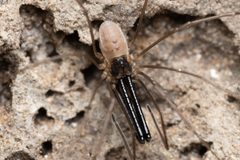
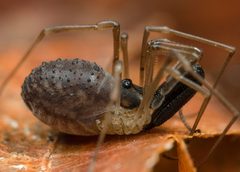
12Taracus is a of small harvestmen (Opiliones) in the Taracidae. Most inhabit limestone and lava caves in western North America, with body lengths ranging from 2.0 to 5.5 mm. The genus contains 14 described species as of 2023, predominantly distributed across the United States with limited representation in Russia.
Pronunciation
How to pronounce Taracus: /ˈtærəkəs/
These audio files are automatically generated. While they are not always 100% accurate, they are a good starting point.
Identification
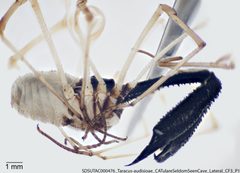
Distinguished from other ischyropsalidoid harvestmen by a combination of cheliceral , pedipalpal , and male genitalia structure. Differentiation from the related Oskoron (formerly included in Taracus) is based on specific tarsal and cheliceral characters; Oskoron spinosus was transferred from Taracus based on distinct morphological features. -level identification requires examination of and reference to original descriptions by Shear (2016, 2018).
Images
Appearance
Small-bodied harvestmen measuring 2.0–5.5 mm in length. Body form adapted for subterranean existence. Detailed morphological features vary among ; specific diagnostic characters include cheliceral and pedipalpal structures used to distinguish .
Habitat
Limestone caves and lava tube systems. Records indicate obligate association with subterranean environments, including both shallow cave passages and deeper recesses.
Distribution
Western North America: Canadian provinces of Alberta and British Columbia; US states of Washington, Oregon, Idaho, Montana, Wyoming, Utah, Nevada, California, Colorado, and New Mexico. Disjunct occurrence in Russia (Primorsky Krai) represented by T. birsteini.
Behavior
Subterranean; activity patterns within caves have not been systematically documented.
Human Relevance
Subject of taxonomic research; several named in honor of colleagues and contributors to arachnology (e.g., T. marchingtoni, T. ubicki, T. audisioae). No documented economic or medical significance.
Similar Taxa
- OskoronFormerly included in Taracus; distinguished by tarsal segmentation and cheliceral . O. spinosus was transferred from Taracus based on these differences.
- HesperonemastomaMember of same Taracidae; differs in geographic distribution and genital .
- CrosbycusMember of same Taracidae; differs in body proportions and pedipalpal structure.
More Details
Taxonomic history
Taracidae was proposed by Schönhofer (2013) to accommodate Taracus, Hesperonemastoma, and Crosbycus, separating them from Sabaconidae. This classification has been adopted in recent treatments though some sources (e.g., NCBI) may retain older family assignments.
Species discovery
Eight of the 14 described were described in 2016 by Shear, reflecting intensive recent survey work in western North American caves. One additional species was described in 2018.