
Sabaconidae
Dresco, 1970
sabaconid harvestmen
Genus Guides
1Sabaconidae is a of harvestmen (Opiliones: Dyspnoi) comprising approximately 50 described . The family exhibits a disjunct distribution spanning eastern North America and temperate Eurasia, with notable diversity in the southern Appalachian Mountains and the Altai Mountains of Russia. Species-level within the family has been complicated by cryptic diversification, particularly in widespread species such as Sabacon cavicolens, which shows evidence of multiple lineages separated by vicariance and rare long-distance events.
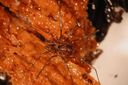
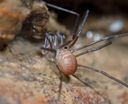
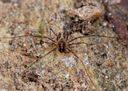
Pronunciation
How to pronounce Sabaconidae: //sæbəˈkɒnəˌdaɪ//
These audio files are automatically generated. While they are not always 100% accurate, they are a good starting point.
Identification
Sabaconidae can be distinguished from other within the superfamily Ischyropsalidoidea by a combination of cheliceral and pedipalpal characters, though specific diagnostic features require detailed morphological examination. The family is characterized by relatively small body size compared to related families and distinctive genital . Accurate identification to level often requires examination of male genitalia and may be complicated by cryptic speciation in widespread .
Images
Habitat
within Sabaconidae occupy specialized microhabitats in temperate forest . Sabacon cavicolens is associated with cave systems and cave-associated environments in the southern Appalachian Mountains. Sabacon zateevi has been documented from the Altai Mountains in South Siberia. The appears to show preference for moist, sheltered microhabitats including rock crevices, talus slopes, and subterranean environments.
Distribution
Disjunct distribution across the Northern Hemisphere. In North America: southern Appalachian Mountains (center of diversity), with extending to the Ozarks and Cumberland Plateau. In Eurasia: Altai Mountains of Russia (Katunsky Reserve and adjacent territories), with additional records from other temperate Asian and European localities. Distribution records include Vermont, USA.
Behavior
genetic studies in Sabacon cavicolens reveal a biogeographical pattern characterized by common vicariance and rare . Female-based range expansion has been documented in some lineages, resulting in northward and westward spread from the southern Blue Ridge. between populations is generally constrained, with riverine barriers associated with genealogical structuring in mitochondrial lineages.
Similar Taxa
- IschyropsalididaeShares superfamily Ischyropsalidoidea with Sabaconidae; distinguished by larger body size and different cheliceral
- CeratolasmatidaeNorth American dyspnoan with overlapping distribution in western regions; differs in pedipalpal and genital characters
More Details
Biogeographical significance
Sabaconidae serves as a model system for studying 'common vicariance, rare ' biogeographical histories. Research on Sabacon cavicolens has demonstrated that apparently widespread may conceal cryptic species-level lineages separated by old vicariance events, with dynamics within lineages showing both in situ divergence and occasional long-distance dispersal.
Taxonomic challenges
Molecular data suggest numerous -level lineages within nominal species, particularly in Sabacon cavicolens. Conservative interpretation recognizes three species (Ozarks, Cumberland Plateau, southern Blue Ridge), though multispecies coalescent analyses support more divergent lineages. This pattern reflects the general challenge of diagnosing harvestman species based on alone.
Sources and further reading
- BugGuide
- GBIF taxonomy match
- iNaturalist taxon
- NCBI Taxonomy
- Catalogue of Life
- Biogeographical evidence for common vicariance and rare dispersal in a southern Appalachian harvestman (Sabaconidae, Sabacon cavicolens)
- The harvestmen fauna (Arachnida: Opiliones) of the Katunsky Biosphere Reserve and adjacent territories (South Siberia, Russia), with a description of a new species of Sabacon (Sabaconidae) and notes on Sabacon sergeidedicatum Martens, 1989