
Platycryptus
Hill, 1979
Tan Jumping Spider
Species Guides
3- Platycryptus arizonensis
- Platycryptus californicus(California Flattened Jumping Spider)
- Platycryptus undatus(Tan Jumping Spider)
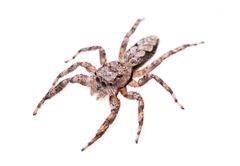
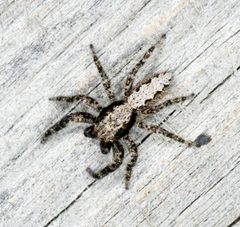
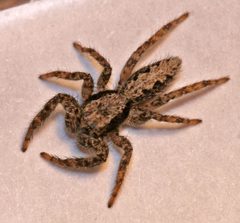
Platycryptus is a of jumping spiders (Salticidae) described by D. E. Hill in 1979. The name derives from Greek 'platy' (flat) and 'crypt' (hidden), referring to their flattened bodies and habit of hiding in crevices. These spiders are characterized by cryptic gray and brown coloration with hairy bodies. They are active hunters found on tree bark and wooden structures, with four recognized distributed across North America, Central America, and Brazil.
Pronunciation
How to pronounce Platycryptus: //ˌplætɪˈkrɪptəs//
These audio files are automatically generated. While they are not always 100% accurate, they are a good starting point.
Identification
Distinguished from other jumping spiders by its flattened, squat body form and cryptic bark-matching coloration. Most likely to be confused with the introduced Gray Wall Jumper (Menemerus bivittatus) where ranges overlap in Texas; Platycryptus is native with a more extensive northern range, while Menemerus is introduced and restricted to southern states. The two can be separated by subtle differences in markings and body proportions, though close examination may be required.
Images
Habitat
Found on or under the bark of trees, and on man-made wooden structures. Occupies vertical surfaces including exterior walls. Hides in crevices and narrow cracks during inactive periods.
Distribution
North America, Central America, and Brazil. Platycryptus undatus (type ) ranges across North America into southern Canada; P. californicus occurs in North and Central America; P. magnus ranges from Mexico to Brazil; P. arizonensis is restricted to the USA.
Behavior
Frequently hides in crevices and cracks, emerging to hunt actively. Does not build webs for prey capture, instead stalking and pouncing on prey like other jumping spiders.
Ecological Role
of small arthropods on bark and wooden surfaces. Contributes to pest control in natural and anthropogenic .
Human Relevance
Occasionally encountered on exterior walls of buildings. May be mistaken for the introduced Gray Wall Jumper. Not known to be of medical or economic significance.
Similar Taxa
- Menemerus bivittatusGray Wall Jumper overlaps in Texas; both found on vertical surfaces with similar size and markings, but Menemerus is introduced with reverse sexual color pattern and more restricted southern distribution
More Details
Etymology
Name derived from Greek platy (flat) + crypt (hidden), describing both physical form and behavioral habit
Taxonomic history
established by D. E. Hill in 1979 to accommodate previously placed in other salticid genera