
Platycryptus undatus
(De Geer, 1778)
Tan Jumping Spider, Familiar Jumping Spider
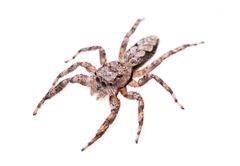
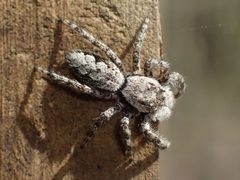
A native North American jumping spider known for its mottled tan coloration and distinctive chevron patterning on the . Females measure 10–13 mm and males 8.5–9.5 mm. Frequently encountered on vertical surfaces such as tree trunks and building walls. Generally reluctant to bite, delivering defensive bites only when squeezed or pinched.
Pronunciation
How to pronounce Platycryptus undatus: /plæ.tɪˈkɹɪp.təs ʌnˈdeɪ.təs/
These audio files are automatically generated. While they are not always 100% accurate, they are a good starting point.
Identification
Distinguished from similar jumping spiders by the combination of: mottled tan coloration (not gray); thin, flattened body; and prominent chevron patterning on the . In Texas, may be confused with the introduced Gray Wall Jumper (Menemerus bivittatus), which has reverse color patterns between sexes and is not native. Platycryptus undatus is native to North America with a much more extensive range extending into southern Canada.
Images
Appearance
Mottled tan coloration overall. displays prominent chevron-like pattern that breaks up the visual profile. Body is notably thin and flattened, an for hiding in tight spaces. Females 10–13 mm in body length; males 8.5–9.5 mm.
Habitat
Found on vertical surfaces including tree trunks and building walls. Hides under loosened bark of trees and in other tight spaces. Occupies wooded areas and human-modified environments.
Distribution
Native to North America. Range extends from eastern United States and adjacent Canada (Manitoba, Ontario) west to Texas and Wisconsin; also northern Mexico. More extensive range than the superficially similar introduced Menemerus bivittatus.
Seasonality
laid and hatch during summer. and all life stages overwinter in silken shelters. Multiple individuals (up to 50 observed) may aggregate in shelters under loose bark for hibernation.
Diet
Active hunter preying on small insects. Has been observed feeding on earthworms.
Life Cycle
laid and hatch during summer. occurs in silken shelters constructed individually, though multiple spiders may aggregate in favorable locations. Duration from egg to not specified.
Behavior
Prefers to hunt on vertical surfaces. Constructs individual silken shelters for ; shelters may be aggregated with many spiders in close proximity under loose bark. Not inclined to bite; defensive biting occurs only when pinched or squeezed.
Ecological Role
of small insects and other . Aggregated creates localized concentrations of predators.
Human Relevance
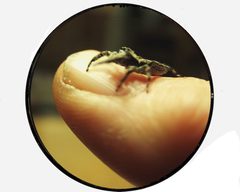
Occasionally encountered on building walls. Defensive bite possible if handled roughly, but generally not aggressive. Subject of observation and photography due to approachable nature.
Similar Taxa
- Menemerus bivittatus (Gray Wall Jumper)Similar size, markings, and preference for vertical surfaces. Distinguished by being non-native (introduced from Old World tropics), gray rather than tan coloration, and reverse sexual color patterns on . Native status and more northern range of P. undatus are key differentiators.
More Details
Overwintering aggregation
Kaston reported observations of up to fifty individuals crowding their silken shelters so tightly under loose bark that they form a continuous blanket, despite building shelters separately and maintaining no direct contact during other seasons.