
Heliophanus
C. L. Koch, 1833
Sun Jumping Spiders
Species Guides
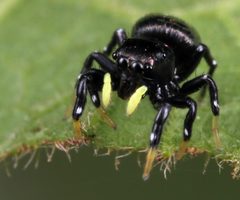
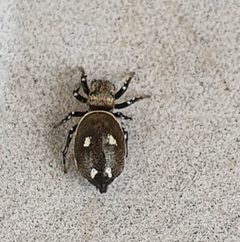
1Heliophanus is a of jumping spiders (Salticidae) comprising approximately 90–170 described , with significant taxonomic revision in 2024 when many African species were transferred to other genera. The genus has a Palearctic and Afrotropical distribution, with core diversity in Europe extending into Asia and Africa. Several species are agrobionts in Central European cereal systems, where they function as . At least one species, Heliophanus dampfi, is a bog with highly restricted distribution.
Pronunciation
How to pronounce Heliophanus: //hɛˌliːoʊˈfænəs//
These audio files are automatically generated. While they are not always 100% accurate, they are a good starting point.
Identification
Distinguished from other salticid by genitalic ; precise identification requires examination of male and female epigynes. Many former African were reclassified in 2024 based on phylogenetic analysis, making historical identifications from that region potentially unreliable without revision.
Images
Habitat
Steppic grasslands, open and partly shaded natural and semi-natural , Central European cereal agroecosystems, and peat bogs. One , H. dampfi, is restricted to Sphagnum moss tussocks in intact raised bogs.
Distribution
Old World distribution throughout Europe, North and southern Africa, and much of Asia. to several islands including the Canary Islands and Madagascar. Two introduced to the United States; one introduced to Brazil.
Diet
. Documented prey includes Drosophila melanogaster, (Metopolophium dirhodum), and web-building spiders (Dictyna spp.).
Behavior
Nutritional state-dependent prey preference has been observed: individuals with lipid-rich diet histories preferentially attack prey over intraguild spider prey, while those on protein-rich or standard diets show no preference or greater willingness to attack dangerous intraguild prey. Short fasting intervals are well tolerated.
Ecological Role
in Central European agroecosystems; agents that reduce of herbivorous pests including cereal aphids. Bog-dwelling contribute to diversity in peatland .
Human Relevance
Valued as natural pest control agents in cereal agriculture. degradation of peat bogs threatens restricted such as H. dampfi, which is known from only five sites.
Similar Taxa
- HelafricanusFormerly included in Heliophanus; African transferred to this by Wesołowska in 2024 based on phylogenetic analysis.
- HeliocapensisFormerly included in Heliophanus; African transferred to this by Wesołowska in 2024.
- TrapezocephalusFormerly included in Heliophanus; African transferred to this by Wesołowska in 2024.
More Details
Taxonomic revision
In 2024, Wanda Wesołowska transferred numerous African from Heliophanus to three new or redefined : Helafricanus, Heliocapensis, and Trapezocephalus. This substantially reduced the species count and redefined the genus's geographic core to the Palearctic region.
Conservation concern
Heliophanus dampfi, the Bog Sun-jumper Spider, is a restricted to intact Sphagnum moss tussocks in raised bogs. Peatland degradation through drainage, burning, and extraction threatens this and other bog-dependent .