
Habronattus dorotheae
(Gertsch & Mulaik, 1936)
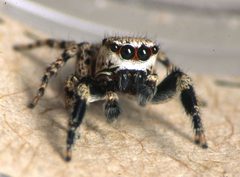
Habronattus dorotheae is a of jumping spider in the Salticidae, described by Gertsch and Mulaik in 1936. The Habronattus is one of the most diverse genera of jumping spiders in North America, with males typically exhibiting elaborate visual and acoustic . As a member of this genus, H. dorotheae likely shares the characteristic ground-dwelling habits and complex mating that have made Habronattus a subject of extensive behavioral research. The species occurs in the southwestern United States and Mexico.
Pronunciation
How to pronounce Habronattus dorotheae: /ˌhæbrəˈnætəs ˌdɔːrəˈθiːi/
These audio files are automatically generated. While they are not always 100% accurate, they are a good starting point.
Images
Distribution
Southwestern United States and Mexico. Records indicate presence in Middle America and North America, with the showing highest diversity in the southwestern U.S.
Similar Taxa
- Habronattus cuspidatusBoth are ground-dwelling Habronattus with males possessing modified third legs for visual ; H. cuspidatus males have a conspicuous spur on the 'knee' joint of the third leg that aids identification
- Habronattus calcaratusClosely related with similar crouching courtship posture and third leg modifications for visual signaling to females
- Euophrys monadnockAnother small, colorful jumping spider found in similar Colorado ; males of both exhibit bright coloration, but E. monadnock has distinctive orange on legs three and four and black hair brushes on front legs rather than third leg modifications