
Attulus finschi
(L. Koch, 1879)
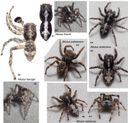
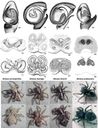
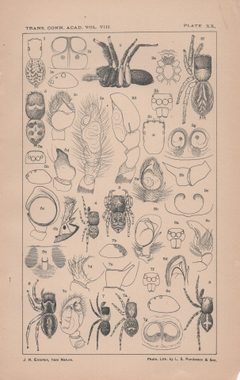
Attulus finschi is a of jumping spider in the Salticidae. It occurs across northern regions of North America and Eurasia, with documented in Russia (from West Siberia to the Far East), Canada, and the United States. As a member of the Attulus , it shares the characteristic jumping ability and visual acuity typical of salticid spiders.
Pronunciation
How to pronounce Attulus finschi: //ˈæt.jʊ.ləs ˈfɪn.ʃi//
These audio files are automatically generated. While they are not always 100% accurate, they are a good starting point.
Images
Distribution
Russia (West Siberia to Far East), Canada, and the United States. GBIF records confirm occurrence in these three countries, with the Russian distribution spanning a wide longitudinal range from western Siberia to the Russian Far East.
Similar Taxa
- Attulus distinguendusBoth are in the Attulus and share the "Distinguished Jumping Spider" in some contexts; however, A. distinguendus is a Critically restricted to two brownfield sites in the UK, whereas A. finschi has a broad transcontinental distribution across northern North America and Eurasia
- Salticus scenicusBoth are jumping spiders (Salticidae) with similar general and hunting , but S. scenicus (Zebra Jumping Spider) is more widely distributed and commonly encountered in human-modified environments
Sources and further reading
- BugGuide
- Wikipedia
- GBIF taxonomy match
- iNaturalist taxon
- NCBI Taxonomy
- Catalogue of Life
- What’s in a name….? - Buglife Blog - Buglife
- Distinguished Jumping Spider – Jumping into Oblivion - Buglife Blog - Buglife
- London Resort – a fact check - Buglife Blog - Buglife
- In defence of the defenceless - Buglife Blog - Buglife