
Attulus
Simon, 1889
Species Guides
6- Attulus ammophilus
- Attulus fasciger(Asiatic Wall Jumping Spider)
- Attulus finschi
- Attulus floricola(Flower Jumping Spider)
- Attulus pubescens(Downy jumping spider)
- Attulus striatus
Attulus is a of jumping spiders ( Salticidae) established by Eugène Simon in 1889. The genus underwent significant taxonomic revision between 2017 and 2020, when molecular phylogenetic analysis consolidated several genera (Sitticus, Sittiflor, Sittilong, Sittipub) under Attulus, which has priority as the oldest available name. The genus comprises approximately 58 distributed across Asia, Europe, and North America, with notable conservation concern for certain species due to restricted requirements.
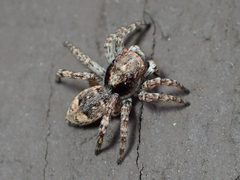
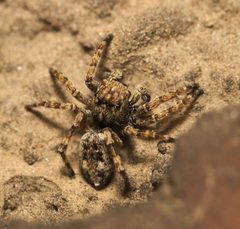
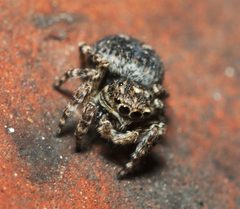
Pronunciation
How to pronounce Attulus: //ˈæt.jʊ.ləs//
These audio files are automatically generated. While they are not always 100% accurate, they are a good starting point.
Identification
Attulus are distinguished from other salticid by their placement in the tribe Sitticini, characterized by specific morphological features associated with this group. The genus was historically confused with Sitticus, from which it was separated and then reconsolidated based on 2020 phylogenetic analysis. Subgeneric divisions within Attulus (A. (Attulus), A. (Sitticus), A. (Sittilong)) reflect morphological and geographic patterns but may not be visually apparent without detailed examination. Species-level identification requires knowledge of genitalic and geographic distribution.
Images
Habitat
varies by . Attulus penicillatus occupies Pannonian steppe grasslands on calcareous bedrock with rocky outcrops and deep-horizon loess soils, specifically utilizing empty land snail shells for . Attulus distinguendus is restricted to brownfield sites—open mosaic habitats on previously developed land with sparse vegetation and exposed substrates. Several species (A. floricola, A. pubescens, A. ammophilus, A. fasciger, A. godlewskii) have been introduced to North America, suggesting for disturbed and anthropogenic environments.
Distribution
Native range spans the Palearctic: Europe, Turkey, Caucasus, Russia (from Europe to Far East), Central Asia, Kazakhstan, Mongolia, China, Korea, and Japan. Several have established introduced in North America (USA and Canada), including A. ammophilus, A. cautus, A. cutleri, A. fasciger, A. finschi, A. floricola, A. godlewskii, A. pubescens, A. striatus, and A. sylvestris. GBIF records confirm presence in Denmark, Norway, Sweden, and Vermont, USA.
Host Associations
- Xerolenta obvia - shelter (empty shell)Used by A. penicillatus for hibernation, molting, mating, and oviposition
- Caucasotachea vindobonensis - shelter (empty shell)Used by A. penicillatus for hibernation, molting, mating, and oviposition
Life Cycle
occurs in empty land snail shells, which serve as microhabitats for hibernation, molting, mating, and -laying. This has been documented in A. penicillatus and is likely shared among related . Shell use represents a specialized microhabitat selection strategy in steppe and grassland environments.
Behavior
has been observed, with multiple individuals of the same cohabiting single shells. In A. penicillatus, were insufficient to determine sex-specific microhabitat preferences, though related species show female preference for shells with greater vegetation cover.
Human Relevance
Attulus distinguendus (Distinguished Jumping Spider) is one of the UK's rarest spiders, restricted to two brownfield sites, making it a flagship for conservation of urban and post-industrial . The species has been central to development disputes, including the proposed London Resort theme park on Swanscombe Peninsula SSSI, one of its two UK localities. The spider's conservation status has been misrepresented in political discourse, with claims that it obstructs development being disputed by conservation organizations. Attulus penicillatus is listed as Endangered (EN) on the Czech Red List of Spiders.
Similar Taxa
- SittisaxRetained as separate by Maddison et al. (2020); distinguished from Attulus by specific morphological and phylogenetic criteria, though historically confused within Sitticus
- AttinellaPrószyński's Sittiab was synonymized with Attinella rather than Attulus; represents a distinct lineage within Sitticini
- Sitticus (sensu stricto)Historically included most sitticines; now restricted to a subset of after 2020 consolidation under Attulus; distinguished by subgeneric placement A. (Sitticus) with 7 species
Misconceptions
The claim that Attulus distinguendus obstructs housing development has been disputed. The inhabits brownfield sites away from planned construction areas at Ebbsfleet, Kent. Political statements conflating its presence with development blockage have been characterized as misleading by conservation organizations.
More Details
Taxonomic instability
The experienced repeated reclassification between 2017 and 2020. Prószyński's 2017 split of Sitticus into seven genera was replaced by Maddison et al.'s 2020 molecular , which restored most to a single genus under the priority name Attulus. Some species changed genus assignment four times in this period (e.g., A. floricola: Sitticus → Sittiflor → Calositticus → Sitticus → Attulus).
Conservation significance
Brownfield supporting Attulus are increasingly threatened by development and 'greening' initiatives. These sites support complex habitat mosaics that resist simple recreation, making species dependent on them effectively irreplaceable. The Swanscombe Peninsula SSSI was designated in 2021 specifically recognizing national importance for including A. distinguendus.
Etymology
The generic name Attulus is a diminutive form of the common salticid prefix -attus, reflecting its original separation from the Attus.
Sources and further reading
- BugGuide
- Wikipedia
- GBIF taxonomy match
- iNaturalist taxon
- NCBI Taxonomy
- Catalogue of Life
- What’s in a name….? - Buglife Blog - Buglife
- Distinguished Jumping Spider – Jumping into Oblivion - Buglife Blog - Buglife
- London Resort – a fact check - Buglife Blog - Buglife
- In defence of the defenceless - Buglife Blog - Buglife
- Microhabitat Selection for Overwintering: Overwintering Conditions of Three Jumping Spiders (Pellenes tripunctatus, P. nigrociliatus, and Attulus penicillatus) Living in Terrestrial Shells in the Czech Republic