
Attulus pubescens
(Fabricius, 1775)
Downy jumping spider
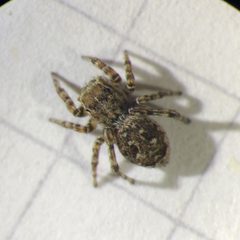
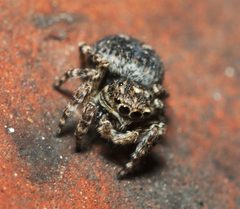
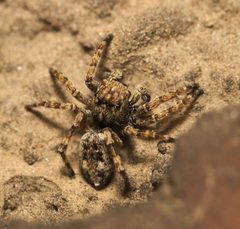
Attulus pubescens is a small jumping spider in the Salticidae, formerly classified as Sitticus pubescens until 2017. Females reach approximately 5 mm in body length, with males slightly smaller at around 4 mm. The exhibits dark coloration with variable white markings and is frequently associated with human structures, including walls, fences, and building interiors. It is native to Europe, North Africa, and parts of Asia, and has been introduced to North America.
Pronunciation
How to pronounce Attulus pubescens: /ˈætjʊləs pjuːˈbɛsɛnz/
These audio files are automatically generated. While they are not always 100% accurate, they are a good starting point.
Identification
Definitive identification relies on microscopic examination of genital structures: the precise architecture of the female epigyne and the form of the male palpal bulb. External coloration and markings are variable and not diagnostic. The can be distinguished from other Attulus species by these structural characters, though this requires specialized knowledge and equipment.
Images
Habitat
Strongly associated with anthropogenic structures: found on walls, fences, and occasionally inside buildings. Away from human habitation, occurs under stones and on tree trunks. Occupies a range of substrates from vertical surfaces to ground-level cover.
Distribution
Native to Europe (including England and Wales), North Africa, Turkey, and eastward to Afghanistan. Introduced to the United States and Canada. GBIF records confirm presence in Belgium and other European localities.
Human Relevance
Frequently encountered due to habits; presence on building exteriors and interiors brings it into regular contact with humans. No documented negative impacts; likely contributes to small control in and around structures.
Similar Taxa
- Attulus distinguendusAlso a small European jumping spider in the same , but distinguished by more restricted UK distribution limited to two brownfield sites, and presumably different genital (though specific comparative details not provided in sources).
- Other Salticidae speciesMany small jumping spiders share general body plan and dark coloration; A. pubescens specifically identified by genital structures rather than external appearance.
More Details
Taxonomic history
Reclassified from Sitticus pubescens to Attulus pubescens in 2017, reflecting revised understanding of salticid and generic boundaries.
Sources and further reading
- BugGuide
- Wikipedia
- GBIF taxonomy match
- iNaturalist taxon
- NCBI Taxonomy
- Catalogue of Life
- What’s in a name….? - Buglife Blog - Buglife
- August | 2021 | Beetles In The Bush
- Distinguished Jumping Spider – Jumping into Oblivion - Buglife Blog - Buglife
- London Resort – a fact check - Buglife Blog - Buglife
- Botanizing at Hawn State Park | Beetles In The Bush
- Missouri | Beetles In The Bush | Page 6