
Neriene
Blackwall, 1833
Species Guides
6- Neriene clathrata(Latticed Sheet-web Weaver)
- Neriene digna
- Neriene litigiosa(Sierra Dome Spider)
- Neriene montana(Old World Dome Sheetweaver)
- Neriene radiata(Filmy Dome Spider)
- Neriene variabilis
Neriene is a of sheet-web weaving spiders ( Linyphiidae) first described by John Blackwall in 1833. As of 2025, the genus contains approximately 62 distributed across Africa, Asia, Europe, North America, and Greenland. These spiders construct distinctive sheet webs—horizontal platforms of silk often accompanied by a dome or bowl-shaped structure above. Species in this genus are small-bodied, with mature females typically measuring only a few millimeters. The genus has been subject to behavioral research, particularly regarding mating plug function in species such as N. emphana.
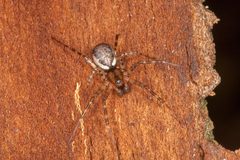
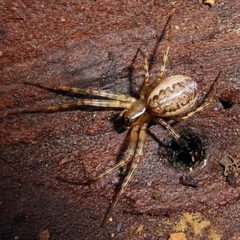
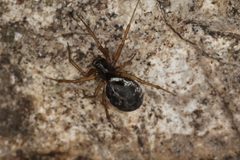
Pronunciation
How to pronounce Neriene: //nɛˈriː.ni.e//
These audio files are automatically generated. While they are not always 100% accurate, they are a good starting point.
Identification
Neriene spiders are small-bodied sheet-web weavers distinguished from other Linyphiidae by their dome or bowl-shaped web architecture combined with a horizontal sheet platform. The belongs to the entelegyne clade, meaning mature females possess a sclerotized (hardened genital structure on the underside of the ) with two symmetrical openings—key diagnostic features for -level identification. Males have correspondingly complex with an embolus (sperm-transferring structure) and bulb. Specific identification requires examination of these genitalic structures.
Images
Habitat
occupy diverse where they can construct their sheet webs, including forest edges, woodlands, and anthropogenic environments. Webs are typically built between twigs, on fences, or suspended from vegetation, usually well above ground level. Some species have been documented in Arizona and other southwestern U.S. locations.
Distribution
has a broad geographic range spanning Africa, Asia, Europe, North America, and Greenland. Distribution records include Denmark, Norway, Sweden, and the United States (including Vermont).
Behavior
Constructs sheet webs—horizontal silk platforms often with an overlying dome or bowl structure. The spider typically hangs inverted beneath the dome or bowl, awaiting prey. Mating involves complex copulation with rhythmic male palpal application. In at least one (N. emphana), mating plug formation occurs through male-female cooperation, with secretion plugs deposited at spermathecal entrances following complete copulation.
Similar Taxa
- FrontinellaBoth construct distinctive dome or bowl-shaped webs with underlying sheets; Frontinella includes the well-known Bowl and Doily Spider (F. communis). Neriene can be distinguished by specific web architecture details and genitalic requiring microscopic examination.