Drapetisca alteranda
Chamberlin, 1909
Northern Long-toothed Sheetweaver
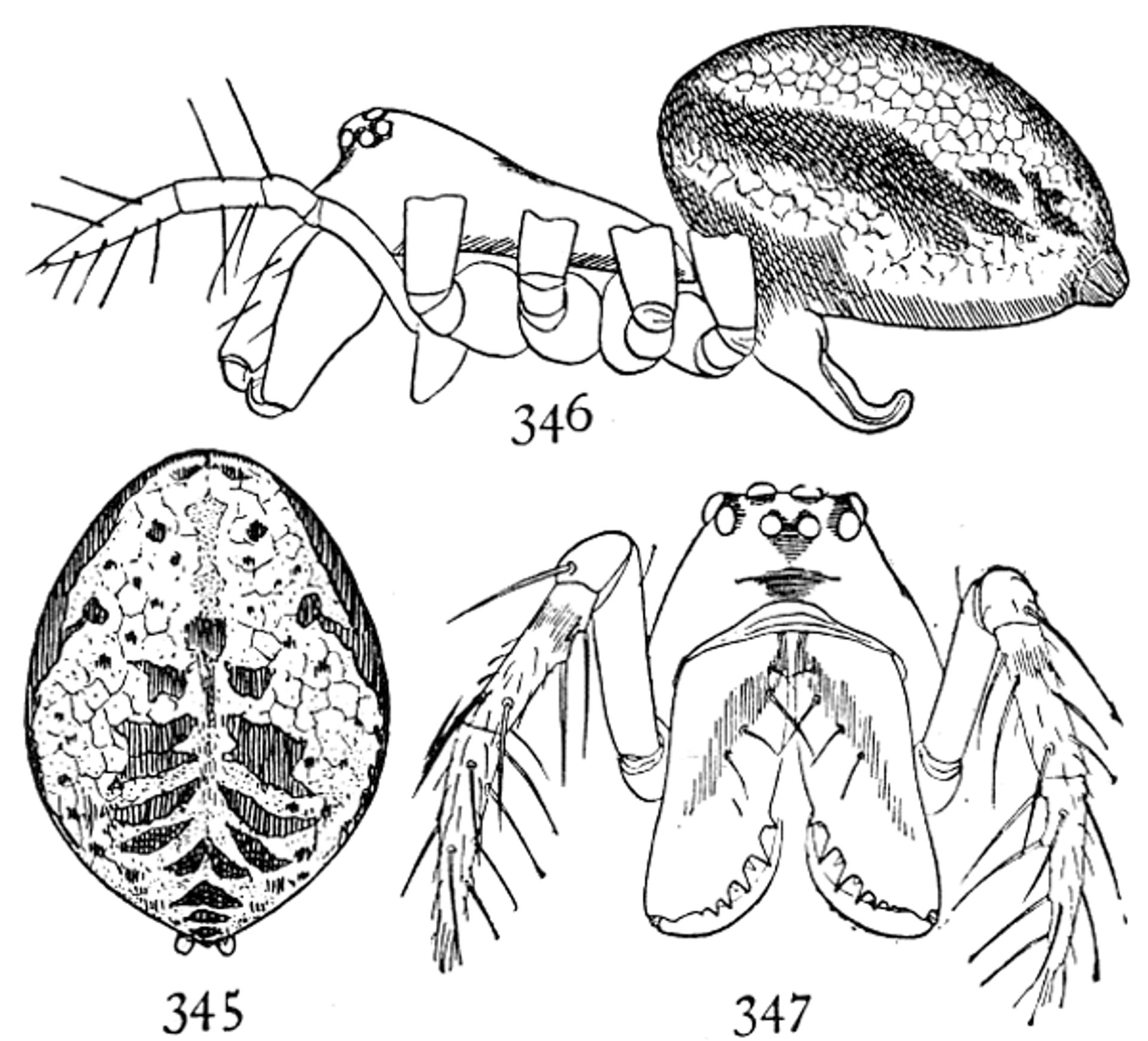
Drapetisca alteranda is a small sheetweb weaver spider in the Linyphiidae, notable for its highly specialized microhabitat on tree trunks. Females measure only 4-4.5 mm in body length. The is and exceptionally well-camouflaged, sitting motionless on extremely thin sheet webs that are nearly invisible against bark. It is atypical among linyphiids in its hunting posture and web structure, resembling ambush-hunting spiders rather than typical sheetweb weavers.
Pronunciation
How to pronounce Drapetisca alteranda: //drəpəˈtɪskə æltəˈrændə//
These audio files are automatically generated. While they are not always 100% accurate, they are a good starting point.
Identification
Most easily confused with hunting spiders such as lynx spiders (Oxyopidae) or other ambush that wait on vegetation without obvious webs. Distinguished by: (1) extremely thin, barely visible sheet web beneath the spider—hunting spiders lack webs entirely; (2) activity pattern; (3) specific microhabitat of tree trunks; (4) cheliceral spines visible under magnification. Unlike typical linyphiids that build conspicuous dome-shaped or flat sheet webs in vegetation or leaf litter, D. alteranda builds minimal webbing on vertical bark surfaces.
Images
Habitat
Strictly associated with tree trunks—deciduous and coniferous. Spider sits on outer bark surface, not in crevices or under bark. Web is minimal, thin sheet suspended just above substrate. Occasionally found in leaf litter on ground, but overwhelmingly arboreal on standing trees.
Distribution
Northern North America: southern Canada and extreme northern United States. Documented from New England (common), Great Lakes region, Montana, Alberta, British Columbia, Manitoba. Absent or unrecorded from northern Great Plains. GBIF records confirm presence in USA and multiple Canadian provinces (Alberta, British Columbia, Manitoba).
Seasonality
active in summer; specific poorly documented. Observed in July in Massachusetts.
Life Cycle
Females observed with sacs attached to body; egg sacs carried. Detailed developmental stages and unknown.
Behavior
. Sits motionless on web during activity period, presumably waiting for prey contact with minimal web. Strongly associated with artificial lighting at night—attracted to lights that illuminate tree trunks. Cryptic posture: legs sprawled, body suspended just above bark surface on thin web threads.
Ecological Role
Presumed of small arthropods on tree trunks; specific prey unknown. Microhabitat specialization suggests role in /arboreal distinct from ground-dwelling linyphiids.
Human Relevance
None documented. Of no economic importance. Occasionally encountered by observers at lights.
Similar Taxa
- Oxyopes spp. (lynx spiders)Similar ambush posture on vegetation and bark, but lack webs entirely and have spiny legs rather than cheliceral spines; .
- Other Linyphiidae (typical sheetweb weavers)Build conspicuous dome-shaped or flat sheet webs in vegetation, leaf litter, or near ground; not specialized on vertical tree trunks with minimal webbing.
- Philodromidae (running crab spiders)Similar flattened posture on bark, but lack webs, have laterigrade legs, and are hunters.
More Details
Taxonomic note
Chamberlin, 1909 is the original describer. The epithet 'alteranda' is Latin, meaning 'the other' or 'changed'—possibly referring to its departure from typical linyphiid and .
Research needs
, prey, web structure details, and complete distribution remain poorly known. The exemplifies how many non-pest arthropods lack basic natural history documentation.