
Sergiolus montanus
(Emerton, 1890)
Common Patterned Ant-mimic Ground Spider
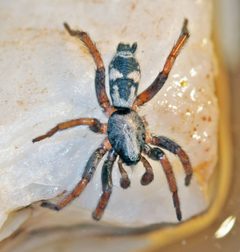
Sergiolus montanus is a medium-sized ground spider in the Gnaphosidae, distinguished by bold coloration that may serve as mimicry of velvet ants (Mutillidae). It is primarily active during daylight hours and does not construct webs for prey capture. The is found in western North America, with records from Alberta and British Columbia in Canada southward through the western United States. Like other members of the , it is agile, nomadic, and capable of climbing vegetation and vertical surfaces.
Pronunciation
How to pronounce Sergiolus montanus: /sɛrdʒiˈoʊlʊs mɒnˈtænʊs/
These audio files are automatically generated. While they are not always 100% accurate, they are a good starting point.
Identification
Sergiolus montanus can be distinguished from similar by the following features: cylindrical at the tip of the (characteristic of all Gnaphosidae); bold, contrasting coloration with patterns that may resemble velvet ants; medium body size with females 6-10 mm and males 5.5-7 mm. Separation from other gnaphosids such as Callilepis requires examination of genitalia: the in females and in males. From S. capulatus (the Variegated Spider), which occurs eastward from Nebraska and Oklahoma, S. montanus is geographically separated as a primarily western . The Sergiolus was formerly placed in Poecilochroa, so older references may use that name.
Images
Habitat
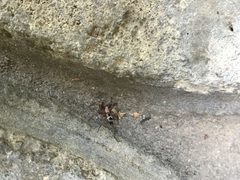
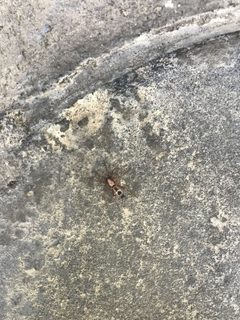
Found in sun-dappled patches on deciduous forest floors, gardens, meadows, and lawns. Also occurs under stones and other objects in reasonably dry situations. Frequently observed on foliage and walls, indicating adaptability to varied microhabitats.
Distribution
Western North America. Documented from Alberta and British Columbia in Canada, and throughout the western United States. The represents the western counterpart to the more eastern S. capulatus.
Seasonality
Active during warmer months. have been observed in almost any season, suggesting a life span exceeding one year. Most frequently encountered during daylight hours due to activity pattern.
Diet
Preys on small insects. Specific prey records are limited, but captivity observations indicate acceptance of small insects such as ants and flies.
Life Cycle
Constructs retreats for molting, sac guarding by females, and likely . Egg sacs are guarded by females within retreats. Development includes egg, spiderling, and stages.
Behavior
(day-active), making it more conspicuous than spiders. Highly agile, especially when fleeing potential danger. Nomadic hunter that prowls through leaf litter; often gives only brief glimpses before reappearing. Good climber, frequently found on foliage and walls. Does not spin webs for prey capture.
Ecological Role
of small insects in leaf litter and ground-level . Potential Müllerian or Batesian mimic of velvet ants (Mutillidae), which may confer protection against predators.
Human Relevance
Occasionally found indoors, where it is often noticed due to distinctive appearance and activity. Not considered dangerous to humans. Can be maintained in captivity with minimal requirements: small container, water source (cotton wick), and small insects as food every 1-2 weeks.
Similar Taxa
- Sergiolus capulatusSimilar bold coloration and -mimic appearance; distinguished by geographic distribution (primarily eastern, from Nebraska and Oklahoma eastward) and subtle genitalic differences
- Callilepis spp.Other gnaphosids with similar coloration; distinguished by genitalic ( and structure)
- Poecilochroa spp.Older references may place Sergiolus in this ; current separates them based on morphological characters
More Details
Taxonomic History
Several members of the Sergiolus were formerly placed in the genus Poecilochroa; older references should be consulted with this synonymy in mind.
Mimicry Hypothesis
The bold coloration of Sergiolus is suspected to represent mimicry of velvet ants (Mutillidae, Timulla), which possess a potent sting and frequent similar . This hypothesis remains partially tested.
Sources and further reading
- BugGuide
- Wikipedia
- GBIF taxonomy match
- iNaturalist taxon
- NCBI Taxonomy
- Catalogue of Life
- Species Records and Accounts
- Grasshoppers of Colorado
- Grasshoppers of Colorado
- Bug Eric: Ground Spiders, Sergiolus
- The perfectly polyphagous Chrysobothris purpureovittata | Beetles In The Bush
- An introduction to the Northern Colletes mining bee - Buglife Blog - Buglife