
Cithaeron praedonius
O. Pickard-Cambridge, 1872
Cosmopolitan Spider Hunter
Cithaeron praedonius is a small, nomadic spider in the Cithaeronidae, native to the Old World from North Africa through the Middle East to India and Malaysia. It has been introduced to multiple regions including Brazil, Cuba, the United States (first recorded in Florida in 2011), and Australia. The hunts actively without building webs and may specialize in preying on other spiders. It has been observed reproducing in introduced , with flat, round sacs and silken molting nests documented.
Pronunciation
How to pronounce Cithaeron praedonius: //kɪθæˈɛrɒn preɪˈdoʊniəs//
These audio files are automatically generated. While they are not always 100% accurate, they are a good starting point.
Identification
The compact arrangement may superficially resemble males of Kukulcania hibernalis (Southern House Spider) or young Loxosceles (recluse spiders), requiring expert examination for reliable identification. Depressed eyes and pseudosegmented distinguish it from similar-looking gnaphosoid spiders. Specimen examination by an arachnologist is recommended for conclusive identification.
Images
Appearance
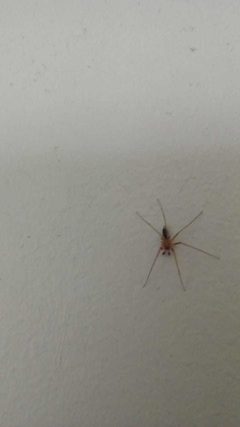
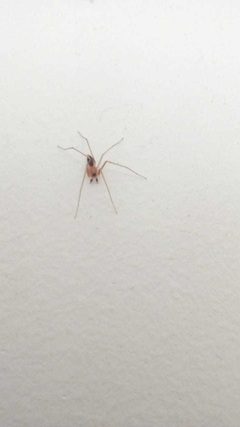
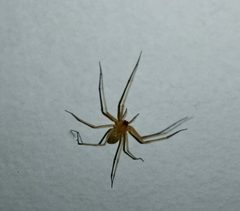
Small spiders with mature females averaging approximately 5 mm in body length, males approximately 3 mm. Body compact with a characteristic arrangement featuring depressed eyes. Coloration and detailed patterning not explicitly described in available sources.
Habitat
Anthropogenic environments; . In native range, occurs in human-associated . In introduced range (Florida), found in residential structures including homes and patios. Creates temporary silken 'nests' for molting and rest, but does not construct permanent webs for prey capture.
Distribution
Native: North Africa (Egypt, Libya, Gambia), Greece, Cyprus, Turkey, Middle East (Syria, Yemen), India, and Malaysia. Introduced: Brazil, Cuba, United States (Florida, first recorded 2011; subsequently documented in multiple counties), Mexico, Honduras, and Australia (Northern Territory).
Seasonality
Activity records in Florida span December through February, with observations continuing into warmer months. Specific seasonal patterns in native range not documented.
Diet
Active hunter of other spiders. In captivity, observed feeding on native cobweb weavers and Latrodectus geometricus (Brown Widow spiders). Specialized on spiders hypothesized but not confirmed as obligate.
Life Cycle
Females produce flat, round sacs. Spiders of different ages observed in introduced , indicating established . Individuals construct silken nests for molting.
Behavior
Nomadic, wandering hunter that does not build webs for prey capture. Dispenses with silk in daily life except for temporary molting/resting nests and sac construction. Rapid, active movement observed.
Ecological Role
, potentially specializing on other spiders. Impact on native spider in introduced range not quantified.
Human Relevance
Accidental introduction to multiple continents via human commerce, likely through unregulated trade or shipping. Frequently mistaken for medically significant spiders (Loxosceles ), causing public concern. Not considered dangerously venomous to humans or pets. Documented in Florida residences indicates establishment potential.
Similar Taxa
- Kukulcania hibernalis male Southern House Spiders share compact arrangement; distinguished by different eye depression pattern and web-building in .
- Loxosceles speciesYoung recluse spiders superficially resemble C. praedonius in body shape and arrangement; distinguished by violin-shaped marking (in some ), different eye pattern (six eyes in three dyads), and medical significance.
- Cheiracanthium speciesYellow sac spiders share similar use and wandering ; distinguished by different arrangement and active silk use for retreat construction.
Misconceptions
Frequently mistaken for Brown Recluse spiders (Loxosceles) by the public due to superficial resemblance, causing unnecessary alarm. Despite being venomous (as are nearly all spiders), it is not considered medically significant to humans.
More Details
Introduction History
First U.S. record from Port Richey, Pasco County, Florida in February 2011, identified through collaboration between citizen scientists and professional arachnologists via online forums. Subsequent records from Winter Springs (Seminole County), Pinellas County, and other Florida locations indicate spreading .
Taxonomic Notes
Until 2013, the only Cithaeronidae with documented worldwide distribution. characterized as lower gnaphosoids with depressed and pseudosegmented .