
Cithaeron
O. Pickard-Cambridge, 1872
Species Guides
1- Cithaeron praedonius(Cosmopolitan Spider Hunter)
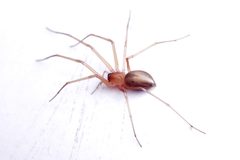
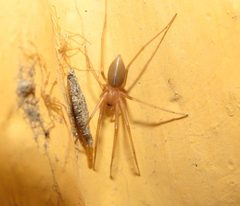
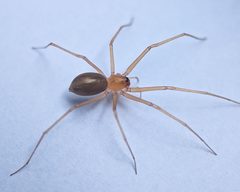
Cithaeron is a of small, nomadic spiders in the Cithaeronidae. Members are characterized by depressed and pseudosegmented . The genus includes with Old World origins that have become established as human-mediated introductions in multiple regions, including the Americas. Cithaeron praedonius, the best-known species, was first documented in Florida in 2011 and has since been recorded in multiple counties.
Pronunciation
How to pronounce Cithaeron: //ˌkɪθaɪˈɛrɒn//
These audio files are automatically generated. While they are not always 100% accurate, they are a good starting point.
Identification
-level identification relies on two diagnostic characters: depressed (flattened) and pseudosegmented . The compact eye arrangement can superficially resemble Loxosceles (recluse spiders) or Kukulcania hibernalis (Southern House Spider), requiring careful examination. Small body size: mature females approximately 5 mm, males approximately 3 mm. Flat, round sacs distinct from the irregular egg sacs of many cobweb spiders.
Images
Distribution
Native range includes western Africa (Gambia), Greece, Libya, and Malaysia. Introduced established in Australia, Brazil, and the United States (Florida). In Florida, documented from Pasco County (Port Richey, 2011), Seminole County (Winter Springs), and neighboring Pinellas County. Cithaeron reimoseri recorded from Porto Alegre, Rio Grande do Sul, Brazil.
Life Cycle
Silken 'nest' constructed for molting and resting; otherwise silk is not used in daily life. sacs are flat and round. Multiple age classes observed at introduction sites, indicating established .
Behavior
Active hunting 'on foot' rather than web-building; does not construct prey-capture webs. Nomadic lifestyle facilitates spread across human-altered landscapes.
Human Relevance
Accidental introduction to multiple continents via human commerce. In Florida, first detection resulted from citizen science collaboration between amateur observers and professional arachnologists. Not dangerously venomous to humans or pets, though superficial resemblance to medically significant spiders (Loxosceles) causes identification confusion.
Similar Taxa
- LoxoscelesCompact arrangement and small size cause misidentification as brown recluse spiders; distinguished by -level characters of Cithaeronidae
- Kukulcania hibernalisSimilar arrangement and body form; Cithaeron are smaller and lack the elongated of male Kukulcania