
Araneus pegnia
(Walckenaer, 1841)
Butterfly Orbweaver
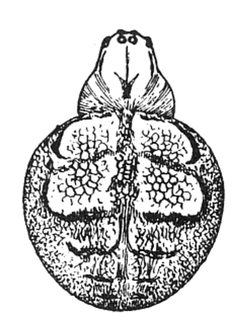
Araneus pegnia is a small orb-weaving spider in the Araneidae, commonly known as the Orbweaver due to the distinctive butterfly-shaped pattern on its . It is among the smaller members of the Araneus, with mature females reaching only 3.5–8.2 mm and males 2.5–5 mm. The has an unusually broad geographic range, extending from the northeastern United States through the southeastern states, west to Arizona and California, and south through Middle America to Ecuador. It is also found on Caribbean islands including Jamaica, the Bahamas, and Cuba.
Pronunciation
How to pronounce Araneus pegnia: /əˈræniəs ˈpɛɡniə/
These audio files are automatically generated. While they are not always 100% accurate, they are a good starting point.
Identification
The Orbweaver can be recognized by the , butterfly-shaped marking on the surface of the , which varies in color from pinkish to gray, brown, or yellowish between individuals. At 3.5–8.2 mm (females) and 2.5–5 mm (males), it is notably smaller than most familiar Araneus such as A. marmoreus or A. diadematus. The epigyne (female genital structure) provides definitive species identification, as with other Araneidae. The small size and distinctive abdominal pattern help distinguish it from specimens of larger orbweaver species.
Images
Habitat
Preferred appear to be moist or wet areas, including bogs in Massachusetts, river bottoms in Rica, and similar riparian or wetland environments. The has been observed utilizing human structures, with individuals found on building eaves and around porch lights where insect prey are attracted.
Distribution
United States (Massachusetts south and west to Ohio, Indiana, the Atlantic and Gulf Coast states, southern Arizona, and California); Caribbean (Bahamas, Cuba, Jamaica); Middle and South America (Ecuador).
Seasonality
Most active in autumn, when mature females become more conspicuous. In temperate regions, most individuals do not survive the first hard frost.
Diet
Feeds on small flying insects captured in its orb web.
Life Cycle
Females deposit in spherical sacs covered with multiple layers of opaque silk, often attached to sheltered locations such as building eaves. The reaches maturity in autumn. Many offspring fail to survive to maturity or perish with the onset of winter.
Behavior
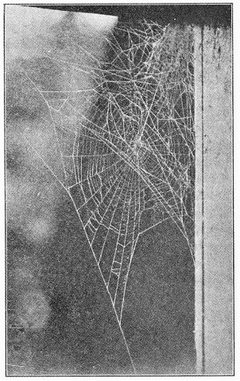
Primarily , constructing webs at night and retreating to concealed shelters during the day. Webs may be incomplete, sometimes lacking a sector with signal threads running to the spider's retreat; some individuals supplement the orb with irregular threads similar to labyrinth orbweavers. Females typically occupy the web hub at night. One record documents a female relocating and rebuilding her web multiple times over six months in a basement environment.
Ecological Role
Serves as prey for spider wasps, including the Black and Yellow Mud Dauber (Sceliphron caementarium) and Agenioideus humilis, which paralyze to provision nests. Functions as a of small insects in wetland and riparian .
Human Relevance
Occasionally encountered in and around human dwellings, particularly near outdoor lighting that attracts prey. The is harmless to humans and can be relocated using standard cup-and-card methods.
Similar Taxa
- Araneus marmoreusSimilar orb-weaving habit but much larger (females 9–18 mm), with marbled rather than -shaped abdominal pattern; also differs in epigyne structure.
- Neoscona speciesSimilar small size and web-building, but lacks the distinctive -shaped abdominal marking and has different arrangement.
- Larinioides cornutusSimilar preference near water and , but has different abdominal pattern and builds more complete orbs.
Sources and further reading
- BugGuide
- Wikipedia
- GBIF taxonomy match
- iNaturalist taxon
- Catalogue of Life
- Bug Eric: Spider Sunday: Butterfly Orbweaver
- Bug Eric: Spider Wasp, Agenioideus humilis, Caught on Video
- Araneus marmoreus encore | Beetles In The Bush
- Answer to Super Crop Challenge #2 | Beetles In The Bush
- Do Chestnut, Lemon, or Peppermint Scents Repel Spiders?
- Bug Eric: Spider Season