
Anyphaena fraterna
(Banks, 1896)
ghost spider
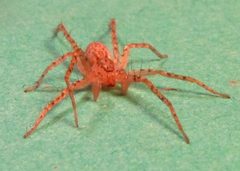
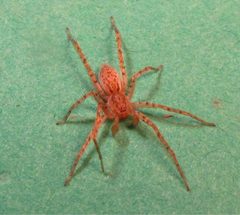
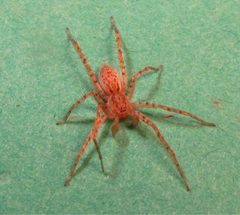
Anyphaena fraterna is a of ghost spider in the Anyphaenidae, first described by Banks in 1896. It belongs to a family of wandering hunters that do not build permanent webs for prey capture. The species is documented from the United States, though specific details about its and remain limited in published literature. Like other anyphaenids, it is presumably nocturnally active and associated with vegetation.
Pronunciation
How to pronounce Anyphaena fraterna: /ænɪˈfiːnə frəˈtɜːrnə/
These audio files are automatically generated. While they are not always 100% accurate, they are a good starting point.
Identification
As a member of Anyphaenidae, A. fraterna can be distinguished from similar by the combination of: eight arranged in two recurved rows; a cylindrical ; and the absence of a cribellum (the silk-producing organ found in some related families). -level identification within Anyphaena requires examination of genitalic characters and is not reliably possible from external alone. It may be confused with spiders in the families Clubionidae (sac spiders) or Cheiracanthiidae, which share similar body plans but differ in eye arrangement and structure.
Images
Distribution
United States. Specific state records are not clearly documented in the provided sources.
Behavior
Members of Anyphaenidae are wandering hunters that do not construct permanent webs for prey capture. They are typically and often found on vegetation. A. fraterna was observed at a blacklight setup in New Mexico, suggesting nocturnal activity and attraction to artificial light sources.
Ecological Role
As a small to medium-sized predatory spider, it likely contributes to in its . The Anyphaenidae is generally associated with foliage-dwelling .
Human Relevance
No documented medical or economic significance. Ghost spiders in this are not considered dangerous to humans.
Similar Taxa
- Anyphaena pacificaAnother North American in the same , separable only by subtle genitalic differences
- Clubionidae (sac spiders)Similar cylindrical body shape and wandering habit, but differ in arrangement and lack the distinctive anyphaenid cheliceral
- Cheiracanthium mildei (yellow sac spider)Convergent body form and foliage-dwelling , but belongs to a different with distinct pattern and
More Details
Taxonomic history
Originally described as Gayenna fraterna by Banks in 1896, later transferred to Anyphaena. The basionym reflects historical classification within a broader concept of the .