
Ixodes kingi
Bishopp, 1911
Rotund Tick
Ixodes kingi is a hard in the Ixodidae, commonly known as the Rotund Tick. It is a three- tick found in prairie and grassland of western North America, where it parasitizes ground-dwelling mammals including prairie dogs, pocket gophers, and ground squirrels. The species exhibits notable size variation between east and west of the Rocky Mountains, with larger specimens found in Alberta and smaller specimens in British Columbia. It is an of wildlife but has been documented on domestic animals and humans.
Pronunciation
How to pronounce Ixodes kingi: //ɪkˈsoʊdiːz ˈkɪndʒiː//
These audio files are automatically generated. While they are not always 100% accurate, they are a good starting point.
Identification
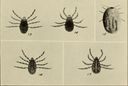
Ixodes kingi can be distinguished from similar Ixodes by its rotund body shape and association with prairie-dwelling . show significant size variation: large specimens occur east of the Rocky Mountains (Alberta, Saskatchewan), while small specimens occur west of the Rockies (British Columbia). Specimens of intermediate size are found scattered throughout the range. The species may be confused with Ixodes sculptus, which shares similar prairie and hosts; accurate identification requires examination of morphological characters such as capitulum and features.
Images
Habitat
Prairie and grassland , particularly areas with prairie dog towns and ground squirrel colonies. Found in open landscapes with sufficient vegetation for questing . Associated with the between grassland and shrubland where small mammal are abundant.
Distribution
Western North America. Documented in Canada from Alberta, Saskatchewan, and British Columbia; in the United States from Colorado and areas east of the Rocky Mountains and Wasatch Range. GBIF records indicate presence in the United States and Mexico. The two main groups are separated by the Rocky Mountains and Wasatch Range.
Seasonality
Nymphs show peak seasonal activity in June and July. and larvae are active in spring and early summer, with some autumn activity reported. All active stages (larvae, nymphs, adults) can overwinter.
Diet
Obligate blood-feeding . Feeds on mammalian throughout all life stages.
Host Associations
- Cynomys spp. - primary prairie dogs; most frequently recorded for nymphs in Colorado study
- Spermophilus richardsonii - Richardson's ground squirrel; common for large specimens in Alberta
- Geomys bursarius - pocket gopher; common for small specimens in British Columbia
- Peromyscus maniculatus - deer mouse
- Sylvilagus spp. - cottontail rabbits
- Canis familiaris - incidental domestic dog
- Homo sapiens - incidental humans
- Bos taurus - incidental cattle
Life Cycle
Three- : larvae, nymphs, and each feed on separate hosts. After hatching, six-legged larvae seek a host, feed, then to eight-legged nymphs. Nymphs feed, drop off, and molt to adults. Adults feed, mate on the host (inferred from typical Ixodes ), then females drop to the ground to oviposit thousands of in soil. In cooler climates, the may take 2-3 years to complete. occurs in all active stages.
Behavior
Exhibits questing : climbs vegetation and extends forelegs to encounter passing . Shows host specificity primarily for ground-dwelling rodents, particularly prairie dogs and ground squirrels. Demonstrates seasonal activity patterns with distinct spring and early summer peaks. Opportunistically feeds on domestic animals and humans when available.
Ecological Role
of small mammals in prairie . Potential for transmission between wildlife, domestic animals, and humans. are linked to abundance, particularly prairie dog and ground squirrel colonies.
Human Relevance
Documented to bite humans, though less frequently than some other Ixodes . Can infest domestic animals including dogs and cattle. Removal within 24 hours of attachment is recommended to reduce transmission risk. Proper removal requires grasping with fine forceps close to the skin and pulling steadily; petroleum jelly or heat methods are not recommended.
Similar Taxa
- Ixodes sculptusShares prairie and similar associations including prairie dogs and ground squirrels; requires morphological examination to distinguish
- Ixodes scapularisBoth are Ixodes with three- , but I. scapularis is found in eastern deciduous forests and is the primary of , whereas I. kingi occupies western prairie and has different host associations
More Details
Population divergence
Studies have identified two distinct size separated by the Rocky Mountains and Wasatch Range. Large specimens dominate in Alberta and areas east of the Rockies, while small specimens occur in British Columbia and areas west of the mountains. Laboratory crosses between populations produce viable F2 larvae, suggesting the is in a state of evolutionary divergence rather than representing separate species.
Nymphal ecology
In Colorado prairie landscapes, nymphs have been collected from 12 across 7 mammal , demonstrating broader host range than previously recognized, though prairie dogs remain the most frequently utilized hosts.
Sources and further reading
- BugGuide
- GBIF taxonomy match
- iNaturalist taxon
- NCBI Taxonomy
- Catalogue of Life
- Just in the tick of time: American dog tick, Dermacentor variabilis, and Black-legged tick, Ixodes scapularis — Bug of the Week
- A trio of trouble – Black-legged ticks Ixodes spp., American dog tick Dermacentor variabilis, and lone star tick Amblyomma americanum — Bug of the Week
- Destination Potomac, Maryland – Spring arrives and with it, ticks: Lone star tick, Amblyomma americanum, and Blacklegged ticks, Ixodes spp. — Bug of the Week
- Time for ticks: Lone star tick, Amblyomma americanum, Blacklegged ticks, Ixodes spp., and American dog tick, Dermacentor variabilis — Bug of the Week
- A trio of trouble just in time for summer: Blacklegged ticks, Ixodes spp.; American dog tick, Dermacentor variabilis; and lone star tick, Amblyomma americanum — Bug of the Week
- CDC Study Shares County Maps of 7 Diseases Spread by Blacklegged Ticks
- Studies on two populations of Ixodes kingi Bishopp (Ixodidae)
- Host usage and seasonal activity patterns of Ixodes kingi and I. sculptus (Acari: Ixodidae) nymphs in a Colorado prairie landscape, with a summary of published North American host records for all life stages