
Uraniidae
Swallowtail Moths, Sunset Moths
Subfamily Guides
2- Epipleminae(Scoopwing Moths)
- Uraniinae(uraniine moths)
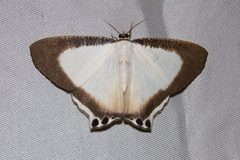
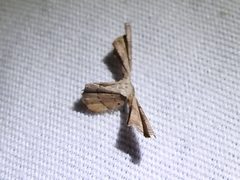
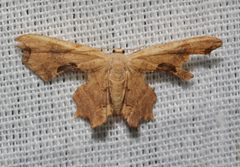
is a of in the order Lepidoptera, comprising approximately 700 across 90 and four . The family exhibits striking diversity in appearance and : species are often brightly colored with iridescent and tail-like hindwing extensions, while species are typically small and pale. Uraniidae are distributed throughout tropical regions of the Americas, Africa, and Indo-Australia. The family is closely related to Geometridae but distinguished by unique wing venation patterns. Some species, notably in the genus Chrysiridia, are known as 'sunset moths' and are apparently toxic, with aposematic coloration serving as warnings.
Pronunciation
How to pronounce Uraniidae: /ʊˈræn.i.aɪ.iː/
These audio files are automatically generated. While they are not always 100% accurate, they are a good starting point.
Identification
Distinguished from Geometridae by wing venation pattern (specific details not provided in sources). may be mistaken for butterflies due to bright coloration, iridescent , and tailed hindwings; however, they lack the clubbed characteristic of butterflies. resemble small, pale geometrid moths but differ in venation. Within- identification requires examination of -level characters: Uraniinae (diurnal, colorful, tailed), Microniinae (small, often with distinctive wing shapes), Epipleminae (nocturnal, small, pale), and Auzeinae (rare, specialized).
Images
Habitat
Tropical and subtropical forests; associated with relatively wet or aseasonal forest . Specific microhabitat preferences vary by : diurnal species often in or forest edges where visual display is effective; species in broader range of forested and disturbed habitats. Some occur in pockets of suitable habitat rather than continuously across range.
Distribution
Pantropical distribution: Americas (Neotropics from Mexico to South America, with records from Texas and Florida in the United States), Africa (including Madagascar), and Indo-Australia (Southeast Asia, New Guinea, Australia, Pacific islands). Specific records from Cuba, Rica, Panama, Sakhalin and Moneron islands (Russian Far East), and China.
Seasonality
Activity patterns split by : active during daylight hours; species active at night. Mass of some Urania species occur periodically but unpredictably, with explosions leading to long-distance movements; resident populations may be absent from apparently suitable for a year or more between migration events.
Host Associations
- Omphalea - larval food plant Urania specialized on Omphalea (Euphorbiaceae); association well-documented for neotropical
Life Cycle
Complete (, larva, pupa, ). Larvae feed on plants, with at least some restricted to Omphalea. Specific details on egg, larval instars, sites, and developmental duration not documented in available sources.
Behavior
Mass documented in Urania, particularly U. fulgens and related , involving synchronized long-distance movements of large numbers of . Non-migratory also occur, with highly fluctuating local abundance. species active during day, often with rapid, direct ; species presumably exhibit typical flight patterns. Adults of some species apparently toxic to .
Ecological Role
Herbivores as larvae, feeding on plants (primarily Omphalea in Urania). of some apparently toxic, suggesting chemical from larval host plants; aposematic coloration may serve as deterrent. Role in pollination not documented. Migratory species may function as nutrient across .
Human Relevance
, colorful (especially Chrysiridia rhipheus, the 'Madagascar sunset ') valued in entomological collections and as aesthetic subjects. Some species studied as models for mimicry and aposematism. Museum specimens increasingly used for genomic research ('museomics') to resolve phylogenetic relationships. No documented economic importance as pests or beneficial species.
Similar Taxa
- GeometridaeClosely related within Geometroidea; distinguished by wing venation pattern and often by activity and bright coloration in Uraniinae
- CastniidaeBoth contain day-flying with clubbed in (but not ); Castniidae often larger and more robust, with different wing shape
- Papilionidae and other butterflies Uraniinae frequently mistaken for butterflies due to bright colors, iridescence, and tailed hindwings; distinguished by non-clubbed and resting posture with wings spread flat
Misconceptions
Frequently mistaken for butterflies due to activity and bright coloration of Uraniinae; however, are true with non-clubbed . The term 'sunset moth' sometimes applied broadly to colorful Uraniidae but specifically refers to Chrysiridia rhipheus. Not all Uraniidae are colorful or diurnal—the includes numerous small, pale, in Epipleminae and Microniinae.
More Details
Phylogenetic placement
belong to superfamily Geometroidea. Molecular phylogenetic studies using museum specimens ('museomics') have corroborated morphological hypotheses of relationships, though some discrepancies remain within related . The family comprises four : Uraniinae (, colorful, migratory), Microniinae, Epipleminae (, small, pale), and Auzeinae.
Museum specimen utility
specimens from museum collections dating to 1892 have yielded usable genomic data for phylogenetic analysis, demonstrating the value of historical collections for modern systematic research.
Sources and further reading
- BugGuide
- Wikipedia
- GBIF taxonomy match
- iNaturalist taxon
- NCBI Taxonomy
- Catalogue of Life
- How Moths Differ from Butterflies | Bug Squad
- Shades of Jurassic Park: Museum Specimens Shown to be "Treasure Troves" of Genomic Data
- Geometroidea: Geometridae: Geometrinae, Larentiinae, Sterrhinae; Uraniidae
- Notas sobre el comportamiento y la migración de urania fulgens (lepidoptera: uraniidae) en Costa Rica
- Land-cover change in Cuba may favor biodiversity: An example using Omphalea (Angiosperma: Euphorbiaceae) and Urania boisduvalii (Lepidoptera: Uraniidae)
- Reproductive behaviour and ecology of Urania (Lepidoptera: Uraniidae) moths and of their larval food plants, Omphalea spp. (Euphorbiaceae)
- New data on geometroid moths (Lepidoptera: Geometroidea: Uraniidae and Geometridae) from Sakhalin and Moneron islands with notes on their taxonomy, distribution and ecology
- The first mitogenomes of the subfamily Epipleminae (Lepidoptera, Uraniidae) and phylogenetic analysis of Macroheterocera.
- A taxonomic review of the genus Eversmannia Staudinger, 1871 (Lepidoptera, Uraniidae) from China, with descriptions of three new species and three new combinations.