
Urania fulgens
Walker, 1854
urania swallowtail moth, green page moth
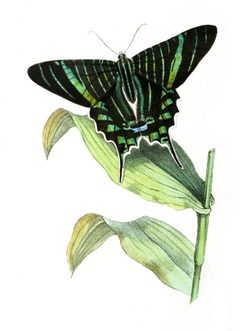
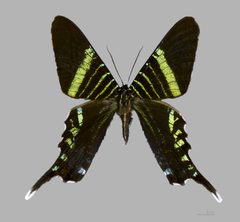
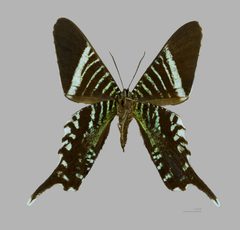
Urania fulgens is a day-flying in the Uraniidae, notable for its iridescent green coloration and swallowtail-like wing shape. The is highly migratory, with moving through Mexico, Central America, and northwestern South America. It has been recorded as a vagrant to Texas. Mass have been documented, including a significant event observed in Rica in 2005 with Tapantí National Park identified as a possible destination.
Pronunciation
How to pronounce Urania fulgens: //ʊˈreɪniə ˈfʊldʒɛnz//
These audio files are automatically generated. While they are not always 100% accurate, they are a good starting point.
Identification
Urania fulgens is distinguished from the similar U. leilus by its distribution west of the Andes (versus east for U. leilus), slightly smaller size, and reduced white on the tail. Both have been treated as in some taxonomic treatments. The species exhibits the characteristic iridescent green coloration and swallowtail wing shape typical of the .
Images
Habitat
Found in tropical and subtropical forests from lowland to montane elevations. Tapantí National Park in Rica has been identified as a possible destination for migrating .
Distribution
Native range extends from Veracruz, Mexico through Central America to northwestern South America, west of the Andes and south to Ecuador. Recorded as vagrant to Texas, USA. GBIF records indicate presence in Middle America, North America, and South America with specific localities including Rionegro, Barrancabermeja, and Manizales in Colombia.
Diet
Larvae feed exclusively on toxic Omphalea (Euphorbiaceae). A new possible larval food plant was recorded in the 2008 Rican study, though the specific plant was not identified in available sources.
Host Associations
- Omphalea - larval food plantexclusive ; toxic plants in Euphorbiaceae
Behavior
Highly migratory; mass observed, including a significant event in Rica in 2005. Both migratory and non-migratory have been documented. have been observed puddling on moist surfaces to obtain nutrients.
Human Relevance
Featured in museum collections and educational displays due to striking appearance. Subject of ecological research on patterns.
Similar Taxa
- Urania leilusOverlapping and historical treatment; distinguished by distribution east of Andes, larger size, and more white on tail
Sources and further reading
- BugGuide
- Wikipedia
- GBIF taxonomy match
- iNaturalist taxon
- NCBI Taxonomy
- Catalogue of Life
- Oh, What a (Moth) Night This Will Be! A Conversation With Bohart's Lepidoptera Curator Jeff Smith | Bug Squad
- Bug of the Week Academy Awards 2018 — Bug of the Week
- To Puddle or Not To Puddle: Review Highlights Unanswered Questions About Butterfly Behavior
- Sphingidae | Beetles In The Bush | Page 2
- The Moth and Me | Beetles In The Bush
- Sanctuary for the Betulaceae | Beetles In The Bush
- Notas sobre el comportamiento y la migración de urania fulgens (lepidoptera: uraniidae) en Costa Rica