
Urania
Fabricius, 1807
Species Guides
1- Urania fulgens(urania swallowtail moth)
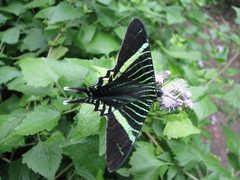
Urania is a of day-flying in the Uraniidae, established by Fabricius in 1807. The genus name derives from Greek mythology, meaning 'heavenly' or 'of heaven,' referencing the muse of astronomy. These moths are notable for their exceptionally bright, iridescent coloration that rivals or exceeds that of butterflies. The genus includes that exhibit distinctive such as puddling along riverbanks to obtain mineral salts.
Identification
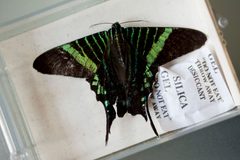
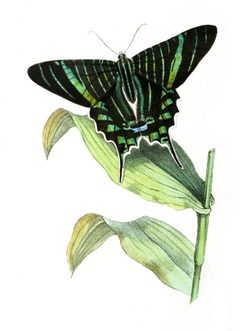
Distinguished from other by activity and brilliant, often metallic coloration. The combination of day-flying with large size and iridescent wings separates Urania from most other moth . Specific identification to level requires examination of wing pattern details and geographic origin.
Images
Distribution
Neotropical region, with occurring in Central and South America including the Amazon basin. Documented along river systems in Peru and Ecuador.
Behavior
have been observed engaging in puddling along Amazonian rivers, congregating on moist substrates to obtain mineral salts. This behavior is analogous to that seen in many .
Human Relevance
Featured in museum collections for their striking appearance. The name has been adopted for astronomical observatories and scientific institutions, reflecting its mythological origins.
Similar Taxa
- Butterflies (Rhopalocera)Share activity and bright coloration, but Urania lacks clubbed characteristic of butterflies and belongs to a different superfamily (Geometroidea vs. Papilionoidea).
- Other UraniidaeRelated in the same share some iridescent qualities but differ in wing shape, pattern specifics, and geographic distribution.
Sources and further reading
- BugGuide
- Wikipedia
- iNaturalist taxon
- NCBI Taxonomy
- Catalogue of Life
- Oh, What a (Moth) Night This Will Be! A Conversation With Bohart's Lepidoptera Curator Jeff Smith | Bug Squad
- Bug of the Week Academy Awards 2018 — Bug of the Week
- To Puddle or Not To Puddle: Review Highlights Unanswered Questions About Butterfly Behavior
- Sphingidae | Beetles In The Bush | Page 2
- The Moth and Me | Beetles In The Bush
- Saturniidae | Beetles In The Bush | Page 2