
Cosmopterigidae
Heinemann & Wocke, 1876
Cosmet Moths
Subfamily Guides
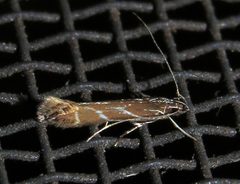
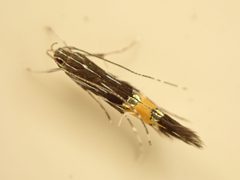
3Cosmopterigidae is a of small commonly known as cosmet moths, with approximately 1,500 described . The family is most diverse in the Australian and Pacific region, where roughly 780 species occur. are characterized by small size and narrow wings. Larvae are typically internal feeders, mining within leaves, seeds, or stems of plants. The family comprises four : Antequerinae, Chrysopeleiinae, Cosmopteriginae, and Scaeosophinae.
Pronunciation
How to pronounce Cosmopterigidae: /kɔzmɔptərɪˈdʒɪdiː/
These audio files are automatically generated. While they are not always 100% accurate, they are a good starting point.
Identification
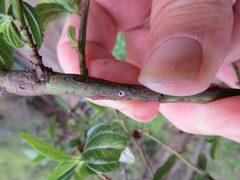
Distinguished from other gelechioid by combination of small size, narrow wings, and reduced patterning. Larval stage often more readily detected than due to characteristic mining damage on plants. Some produce visible silk webbing or patterns associated with feeding damage. Specific identification typically requires examination of genitalia or .
Images
Habitat
closely tied to plant distribution. Includes wetlands where Typha occur, as well as terrestrial environments supporting the diverse host plants used by different species. Specific habitat requirements vary considerably among species and are generally poorly documented for most .
Distribution
Global distribution with approximately 1,500 described . Highest diversity in Australian and Pacific regions (~780 species). Present in Europe, North America, and with scattered records from New Zealand, Russia, and Japan. Distribution records documented from Denmark, Norway, Sweden, and Vermont, USA.
Diet
Larvae feed internally on plant tissues, including leaves, seeds, and stems of plants. In Limnaecia phragmitella, early instars mine in leaf before moving to seedheads. Feeding mode is primarily endophytic mining.
Host Associations
- Typha latifolia (Bulrush) - larval Larvae mine in seed and stems
- Typha angustifolia (Lesser Bulrush) - larval Larvae mine in seed and stems
- Periploca ceanothiella (recorded as Stagmatophora ceanothiella) - for Documented for ichneumon Calliephialtes grapholithae
Life Cycle
Complete with , larva, pupa, and stages. Larvae are the primary feeding stage and typically occur internally within plant tissues. In Limnaecia phragmitella, larvae produce silk that prevents seed down . Pupal characteristics vary among and may have taxonomic significance, though detailed studies are limited.
Behavior
Larvae are concealed feeders, mining within plant tissues rather than feeding externally. Some produce silk webbing associated with feeding sites. are generally inconspicuous and poorly studied behaviorally.
Ecological Role
Larvae function as primary consumers of plant tissues, with feeding damage concentrated in seeds, stems, and leaves. Some serve as for , including Calliephialtes grapholithae (Ichneumonidae). Specific roles are poorly documented for most species.
Human Relevance
Generally of minimal direct economic importance. Some may be of interest in wetland studies due to associations with emergent macrophytes like Typha. The has received recent attention through sequencing initiatives, including the Darwin Tree of Life project.
Similar Taxa
- AgonoxeninaeFormerly included within Cosmopterigidae but now treated as separate or depending on classification system; historical taxonomic confusion requires careful examination of current literature
More Details
Genomic Resources
High-quality -level assembly available for Limnaecia phragmitella (Shy Cosmet Moth), generated as part of the Darwin Tree of Life project. Assembly includes 30 chromosomal pseudomolecules (29 + Z ) with QV scores exceeding 55 and 98.5% BUSCO completeness.
Taxonomic History
Several formerly placed in Cosmopterigidae have been reassigned, including Eritarbes, Lallia, Scaeothyris, and Xestocasis. Current classification recognizes four , though generic assignments remain under study.
Sources and further reading
- BugGuide
- Wikipedia
- GBIF taxonomy match
- iNaturalist taxon
- NCBI Taxonomy
- Catalogue of Life
- Bug Eric: A Potential New Host Record for Calliephialtes grapholithae (Hymenoptera: Ichneumonidae) from a Paper Wasp nest (Hymenoptera: Vespidae: Polistes metricus)
- Host Plants and Illustrations of the Feeding Habits, Last Instar Larva, and Pupa of Anoncia mosa Hodges (Gelechioidea: Cosmopterigidae), with Notes on Larval and Pupal Characters of Potential Taxonomic Significance in the Cosmopterigidae
- The genome sequence of the Shy Cosmet Moth, Limnaecia phragmitella Stainton, 1851 (Lepidoptera: Cosmopterigidae).