
Chloropidae
Rondani, 1856
frit flies, grass flies, eye gnats
Subfamily Guides
3- Chloropinae(grass flies)
- Oscinellinae(grass flies)
- Siphonellopsinae
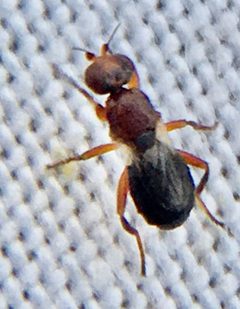
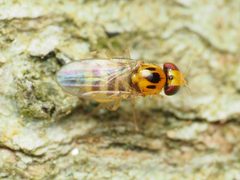
are a large of small flies comprising approximately 2000 described in over 160 , distributed worldwide. are minute to small (1.0–4.0 mm, rarely to 12 mm), typically yellow, black, gray, or greenish, with a shiny appearance due to sparse . The often bears three to five dark longitudinal stripes. Larvae exhibit diverse : most are phytophagous, feeding on grasses and cereal crops, with some species causing significant agricultural damage; others are saprophagous, predatory, parasitic, or kleptoparasitic. A few species in genera Hippelates and Siphunculina are attracted to lachrymal secretions and other body fluids of mammals, earning the name 'eye gnats' and serving as mechanical of bacterial and viral .

Pronunciation
How to pronounce Chloropidae: /ˌklɔːrəˈpɪdiː/
These audio files are automatically generated. While they are not always 100% accurate, they are a good starting point.
Identification
Minute to small size (1.0–4.0 mm, rarely 6.0–12 mm); yellow, black, gray, or greenish coloration; with three to five dark longitudinal stripes on light background; trapezoidal or triangular in profile; vertical triangle often large and or matte; usually thin with short sparse , rarely thickened and densely pubescent; short and soft; wings usually fully developed, rarely reduced to small disks; reduced wing venation; male genitalia often require examination for precise identification.
Images
Habitat
Grasslands, agricultural fields, cereal crop areas, and with Poaceae, Cyperaceae, and Typhaceae; some associated with rotting wood, dead herbaceous plant material, fungi, or pitcher plants; eye gnats associated with areas where mammalian are present.
Distribution
Worldwide; particularly abundant in agricultural regions with cereal ; Mediterranean documented from Cyprus; species with vast ranges documented across Europe, Asia, and Indonesia; some species migrate seasonally, including southward from UK shores.
Seasonality
active during warmer months; some exhibit winter as larvae or adults in temperate regions; migratory species undertake seasonal movements; year-round activity possible in mild climates.
Diet
Larvae primarily phytophagous on grasses (Poaceae), sedges (Cyperaceae), and cattails (Typhaceae), developing within stems, inflorescences, or seeds; some larvae saprophagous in rotting wood or dead plant material; predatory larvae occur in spider cocoons, locust nests, or as root ; kleptoparasitic feed on prey captured by other insects; of eye gnats feed on lachrymal secretions and other body fluids of mammals.
Life Cycle
Larvae develop through instars within plant tissues, fungal material, or as /; phytophagous mine stems or feed on seeds; some species cause gall formation on stems; occurs within host material or soil; emerge to mate and oviposit; some species have multiple per year; winter observed in temperate species.
Behavior
Some assemble in large on tree trunks, walls, or windows; eye gnats exhibit persistent hovering around mammalian and ; kleptoparasitic species locate through chemical cues from defensive secretions of prey insects; migratory documented in some small species undertaking deliberate directional .
Ecological Role
Major agricultural pests of cereal crops including wheat, barley, oats, and rice; some contribute to nutrient cycling as saprophages; predatory and parasitic species regulate of other insects; eye gnats serve as mechanical for bacterial including Treponema pallidum pertenue (yaws), Haemophilus influenzae aegyptius (Brazilian purpuric fever), and Streptococcal , as well as vesicular stomatitis virus; kleptoparasites exploit -prey interactions.
Human Relevance
Similar Taxa
- MilichiidaeBoth contain kleptoparasitic attracted to chemical cues from prey defensive secretions; distinguished by Milichiidae having different wing venation and body form.
- AgromyzidaeBoth are small Diptera with phytophagous larvae; Agromyzidae are leaf miners with distinct larval feeding patterns and different morphological features.
- Oscinellinae (subfamily) within ; distinguished by male genitalia characteristics including well-developed and edites.
Sources and further reading
- BugGuide
- Wikipedia
- GBIF taxonomy match
- iNaturalist taxon
- NCBI Taxonomy
- Catalogue of Life
- Bug Eric: New Year’s Insects and Spiders
- Bug Eric: 2026
- New Species of Fly is First in Its Family to Parasitize Ants
- Milichiideae | Beetles In The Bush
- Insect Migration (Part 1) - Buglife Blog - Buglife
- Mudo Pryfed (Rhan 1) - Buglife Blog - Buglife
- Chloropid flies (Diptera, Chloropidae) of Cyprus
- Dipteran Pests: Families Tipulidae and Chloropidae
- Peer Review #2 of "Chloropid flies (Diptera, Chloropidae) associated with pitcher plants in North America (v0.1)"
- Peer Review #1 of "Chloropid flies (Diptera, Chloropidae) associated with pitcher plants in North America (v0.1)"
- Peer Review #3 of "Chloropid flies (Diptera, Chloropidae) associated with pitcher plants in North America (v0.1)"
- Vast ranges of some Oscinella species (Diptera: Chloropidae)
- Cryptonevra nigritarsis (Duda) (Diptera: Chloropidae): Taxonomic and Host Plant Status
- The complete mitochondrial genome analysis of Elachiptera decipiens (Loew, 1863) (Diptera: Chloropidae).