
Anadenobolus
Silvestri, 1897
Species Guides
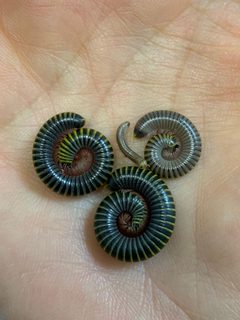
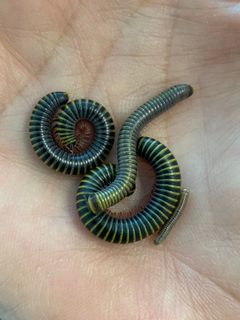
1- Anadenobolus monilicornis(Bumblebee Millipede)
Anadenobolus is a large of millipedes in the Rhinocricidae, described by Silvestri in 1897. The genus contains more than 100 described , making it one of the most species-rich genera within its family. Members are classified in the order Spirobolida, a group of large, cylindrical millipedes commonly known as giant millipedes or round-backed millipedes.
Pronunciation
How to pronounce Anadenobolus: //əˌnædəˈnɒbələs//
These audio files are automatically generated. While they are not always 100% accurate, they are a good starting point.
Identification
Anadenobolus are distinguished from other Rhinocricidae by genitalic characters, particularly the structure of the (modified male reproductive appendages on the seventh body segment). Species-level identification requires examination of these structures and often relies on subtle differences in gonopod . The genus as a whole is characterized by the Spirobolida body plan: cylindrical, smooth-backed appearance with relatively short legs compared to body length.
Images
Habitat
of Anadenobolus inhabit tropical and subtropical environments, primarily in the Caribbean region and Central and South America. They occur in forested areas where they occupy the leaf litter layer and soil surface, requiring humid conditions to prevent desiccation.
Distribution
The is distributed across the Caribbean islands, Central America, and northern South America. Specific ranges vary, with many island endemics in the Caribbean and others occurring on the mainland from Mexico through northern South America.
Ecological Role
Anadenobolus function as in forest , processing decaying plant material and contributing to nutrient cycling. Their burrowing and feeding activities aerate soil and facilitate decomposition.
Human Relevance
Some larger in related Spirobolida are kept as pets, though specific human uses for Anadenobolus species are not well documented. Like many millipedes, they can release defensive secretions when disturbed, which may cause minor skin irritation.
Similar Taxa
- RhinocricusAnother large in Rhinocricidae; distinguished by structure and geographic distribution patterns, with Rhinocricus more concentrated in South America.
- TrigoniulusOccurs in similar ; belongs to the Trigoniulidae rather than Rhinocricidae, separated by differences in structure and male genitalia.
More Details
Taxonomic History
The was established by Filippo Silvestri in 1897. The large number of (100+) reflects both genuine diversity and the historically species-rich nature of tropical faunas, though some species may await taxonomic revision.
Research Gaps
Despite the large number of described , many aspects of Anadenobolus remain poorly studied. , specific requirements, and ecological interactions are largely unknown for most species.