
Xystocheir dissecta
(Wood, 1867)
Species Guides
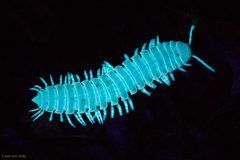
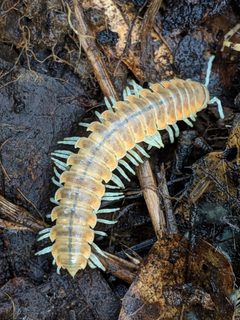
1Xystocheir dissecta is a flat-backed millipede in the Xystodesmidae. It is found along the coast of Northern California, particularly in and around the San Francisco Bay Area. The is notable for its chemical defense system, producing hydrogen cyanide gas when threatened. Three are recognized: X. d. dissecta, X. d. microrama, and X. d. taibona.
Pronunciation
How to pronounce Xystocheir dissecta: //zɪsˈtoʊkɪər dɪˈsɛktə//
These audio files are automatically generated. While they are not always 100% accurate, they are a good starting point.
Identification
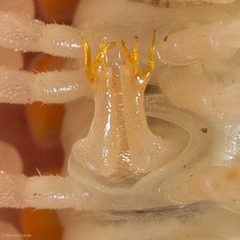
As a flat-backed millipede (order Polydesmida), X. dissecta has a dorsoventrally flattened body form with lateral extensions (paranota) on each segment. The can be distinguished from other xystodesmid millipedes in its range by its specific coastal Northern California distribution and, when threatened, its production of hydrogen cyanide gas with benzaldehyde as a detectable byproduct. The three differ in subtle morphological features: X. d. dissecta (the nominate subspecies), X. d. microrama (described 1996), and X. d. taibona (described 1912).
Images
Habitat
Coastal and near-coastal environments in Northern California. Found in oak woodlands, which cover extensive areas of its range. Activity is moisture-driven, with millipedes becoming active during periods of adequate soil moisture.
Distribution
Restricted range in North America, primarily in and around the San Francisco Bay Area along the coast of Northern California. The range is smaller than that of its , Promecognathus beetles.
Seasonality
Activity correlates with seasonal moisture patterns, peaking during periods of winter and spring rains. At higher elevations and northern parts of the range, colder winters push activity to later spring and early summer. During dry conditions, individuals become inactive and difficult to locate.
Behavior
When threatened, individuals release hydrogen cyanide gas from paired glands along the sides of each body segment. This chemical defense is effective against most . The responds to attack by twisting, thrashing, and curling into a tight ball to shield its underside. Defensive secretions are released through microscopic openings in each gland, sometimes at mere touch.
Ecological Role
Prey for , particularly beetles in the Promecognathus (Carabidae). The ' chemical defense system and the unique cyanide of Promecognathus represent a documented predator-prey evolutionary arms race. The almond-smelling benzaldehyde byproduct of cyanide production may serve as an olfactory warning signal to potential predators.
Human Relevance
The hydrogen cyanide defense can cause irritation and headaches in humans when millipedes are observed in poorly ventilated enclosed spaces. The has been featured in scientific media including PBS Digital Studios' Deep Look series, highlighting its toxic relationship with cyanide-tolerant beetles. Research on this species and its has potential medical applications for understanding cyanide mechanisms.
Similar Taxa
- Other Xystocheir speciesCongeneric millipedes in the Xystocheir share the flat-backed body form and cyanide defense; identification to level requires examination of and geographic distribution.
- Other PolydesmidaMany flat-backed millipedes in the order Polydesmida possess similar cyanide-producing glands; identification relies on detailed morphological examination and geographic range.
More Details
Chemical defense biochemistry
The stores chemical precursors to cyanide (benzaldehyde cyanohydrin) in paired glands along each segment. in these glands catalyze breakdown into hydrogen cyanide gas and benzaldehyde when the is under duress.
Predator specialization
Promecognathus beetles are the only known that can overcome the cyanide defense of X. dissecta. These beetles exhibit exceptional cyanide rather than avoidance , representing the first documented case of cyanide tolerance in predatory insects.