
Xystocheir
Cook, 1904
Species Guides
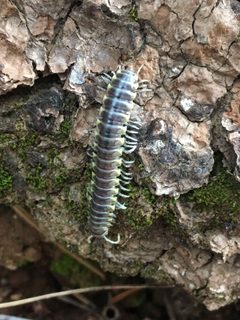
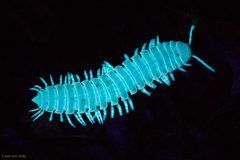
2Xystocheir is a of flat-backed millipedes in the Xystodesmidae, to California. The genus comprises nine distributed in the Coast Ranges and Sierra Nevada. Members of this genus are notable for producing cyanide as a chemical defense against . Xystocheir dissecta, a species within this genus, has been documented to fluoresce under ultraviolet light.
Pronunciation
How to pronounce Xystocheir: // ˌzɪs.toʊˈkaɪər //
These audio files are automatically generated. While they are not always 100% accurate, they are a good starting point.
Identification
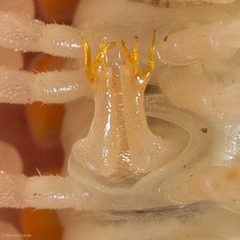
Flat-backed millipedes in this can be distinguished from other polydesmidan millipedes by their California distribution and membership in the tribe Xystocheirini. -level identification requires examination of and other subtle anatomical features. The genus is characterized by the presence of cyanide-producing glands along the sides of each body segment, a trait shared with many Polydesmida but particularly well-developed in Xystodesmidae.
Images
Habitat
Found in oak woodlands and associated in the Coast Ranges and Sierra Nevada of California. Activity is moisture-driven, with becoming difficult to locate during dry periods.
Distribution
to California, United States. Distributed in the Coast Ranges and Sierra Nevada. Xystocheir dissecta has a particularly restricted range centered on the San Francisco Bay Area.
Seasonality
Activity peaks in late winter to early spring in most of the range, correlating with winter rains. At higher elevations and northern portions of the range, activity shifts to later spring and early summer due to colder winters. During dry conditions, individuals become inactive and difficult to find.
Behavior
When attacked, individuals twist violently and curl into a tight ball to shield the vulnerable underside while simultaneously releasing cyanide gas from lateral glands. The defensive secretion contains hydrogen cyanide and benzaldehyde, which produces an almond-like odor. Xystocheir dissecta has been observed to fluoresce under ultraviolet light.
Ecological Role
Serves as a specialized prey item for the Promecognathus, which has evolved exceptional to cyanide specifically to exploit this food source. The millipedes' chemical defense excludes most other potential , creating a with limited competition.
Human Relevance
Xystocheir dissecta has been used in research on -prey chemical , specifically studies of how Promecognathus beetles withstand cyanide. The ' fluorescence under black light has been noted in contexts. The cyanide defense can cause irritation and headaches in humans exposed to concentrated emissions in enclosed spaces.
Similar Taxa
- Other PolydesmidaDistinguished by California distribution and tribe-level classification; many other flat-backed millipedes lack the specific combination of geographic restriction and found in Xystocheir.
- Other XystodesmidaeRequires detailed examination of male and other subtle morphological characters for definitive identification; the tribe Xystocheirini is to western North America.
More Details
Chemical Defense
The cyanide defense system involves paired glands along each segment that store benzaldehyde cyanohydrin. When threatened, enzymatic breakdown produces hydrogen cyanide gas and benzaldehyde. The emission is sufficient to be detected by smell from a meter away and can affect human observers in enclosed spaces.
Bioluminescence
Xystocheir dissecta fluoresces under ultraviolet light, a trait discovered incidentally during rat monitoring on Alcatraz Island using fluorescent dye . The fluorescence is intrinsic to the and not dependent on ingestion of fluorescent materials.
Species Diversity
The currently contains nine following a 1996 revision: X. bistipita, X. brachymacris, X. dissecta, X. modestior, X. prolixorama, X. reducta, X. solenofurcata, X. stenomacris, and X. stolonifera.