
Nannaria terricola
(Williams & Hefner, 1928)
Loam-dwelling Twisted-Claw
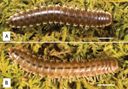
Nannaria terricola is a flat-backed millipede in the Xystodesmida, characterized by its loam-dwelling habits and the distinctive twisted, flattened claws on the legs of males. The is found in the Great Lakes region of the United States. Like other members of the Nannaria, it plays a role as a decomposer in forest . The species was originally described as Fontaria terricola by Williams & Hefner in 1928 before being transferred to Nannaria.
Pronunciation
How to pronounce Nannaria terricola: /nænˈnɑːriə ˈtɛrɪˌkoʊlə/
These audio files are automatically generated. While they are not always 100% accurate, they are a good starting point.
Identification
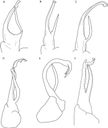
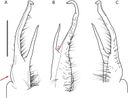
Males possess small, twisted and flattened claws on their legs—the diagnostic feature giving the group its of "twisted-claw millipedes." Specific distinguishing features for N. terricola relative to other Nannaria are not documented in available sources. The species is part of the wilsoni species group within the .
Images
Habitat
Found in forested , with a preference for loam soils. Like other Nannaria , it is likely to inhabit areas near streams and remain buried under leaf litter or soil, exhibiting cryptic .
Distribution
Great Lakes region of the United States; broader North American distribution reported but specific range boundaries not well documented.
Behavior
Exhibits cryptic , tending to remain buried in soil and leaf litter, sometimes staying completely beneath the surface. This makes specimens difficult to collect.
Ecological Role
As a decomposer, breaks down leaf litter and releases nutrients into the .