Pseudopolydesmus paludicolus
Hoffman, 1950
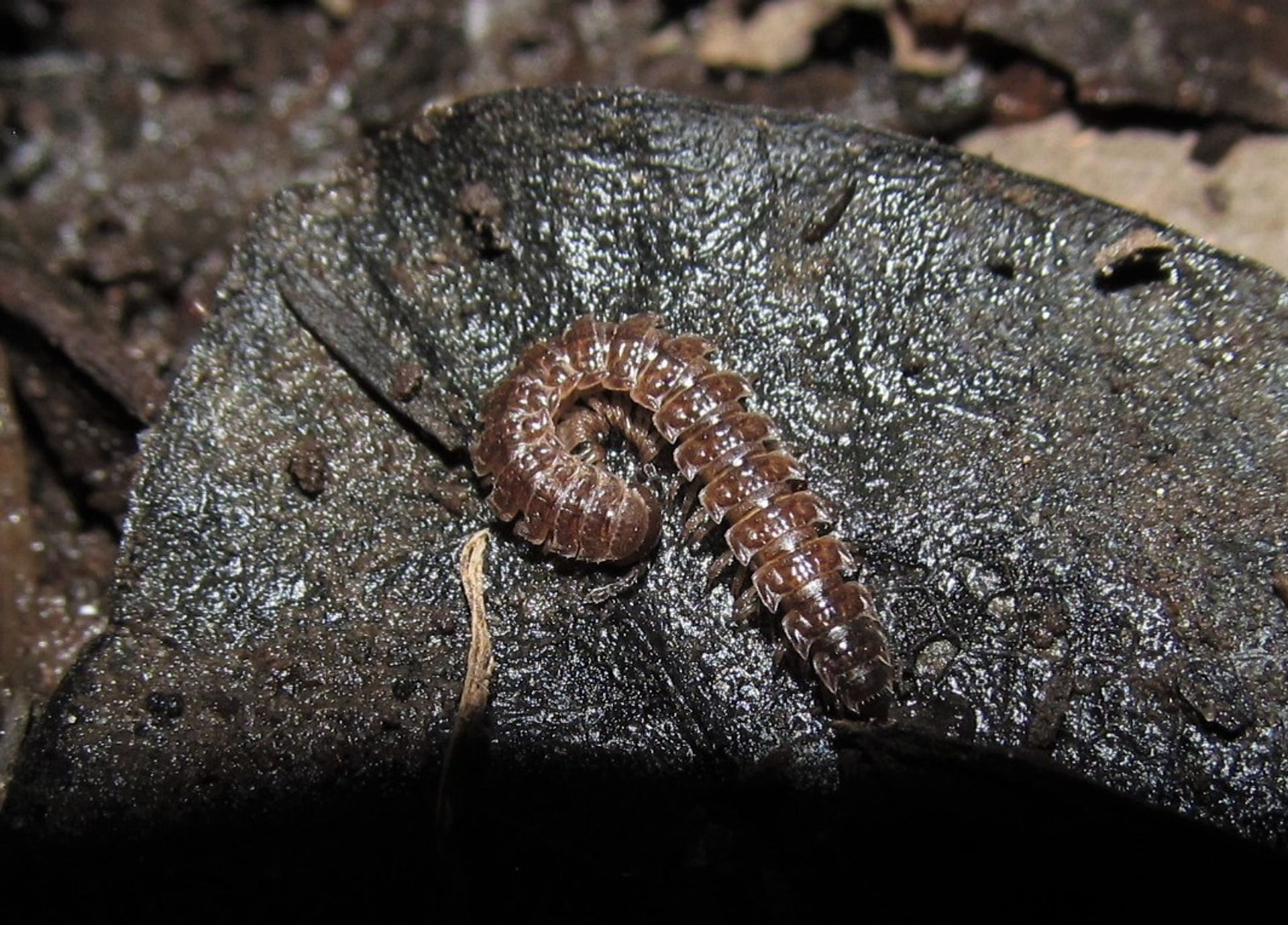
Pseudopolydesmus paludicolus is a of flat-backed millipede in the Polydesmidae, described by Hoffman in 1950. It belongs to a characterized by a flattened body form typical of polydesmidan millipedes. The species epithet 'paludicolus' (from Latin 'palus' meaning marsh and 'cola' meaning dweller) suggests association with wetland or marshy . Documentation of this species remains limited, with few published records beyond original description.
Pronunciation
How to pronounce Pseudopolydesmus paludicolus: /ˌsjuː.doʊˌpɒl.iˈdɛz.məs ˌpæl.juˈdaɪ.kə.ləs/
These audio files are automatically generated. While they are not always 100% accurate, they are a good starting point.
Identification
Flat-backed millipedes in the Polydesmidae are distinguished from cylindrical millipedes by their strongly flattened, often wing-like lateral extensions (paranota) on each body segment. -level identification within Pseudopolydesmus requires examination of , specifically the modified male reproductive appendages on the seventh body segment. Detailed diagnostic features for P. paludicolus relative to such as P. serratus have not been widely published in accessible literature.
Images
Habitat
The epithet 'paludicolus' indicates marsh-dwelling habit. Specific microhabitat preferences (e.g., soil moisture, decaying wood, leaf litter) have not been documented in published sources.
Distribution
Recorded from Virginia, United States. The broader North American distribution remains poorly documented beyond this single state record.
Similar Taxa
- Pseudopolydesmus serratusCongeneric flat-backed millipede with similar body plan; distinguished by and potentially geographic distribution, though precise differentiating characters for P. paludicolus require examination.
More Details
Etymology
The specific epithet 'paludicolus' derives from Latin 'palus' (marsh, swamp) and 'cola' (dweller, inhabitant), indicating the ' presumed association with marshy or wetland environments.