
Litiulus
Chamberlin, 1940
Species Guides
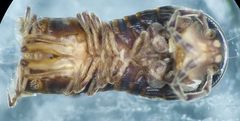
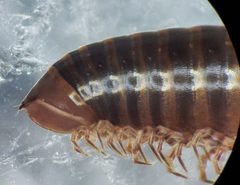
1Litiulus is a of millipedes in the Parajulidae, containing only Litiulus alaskanus. It is to the northeastern Pacific coastal region, ranging from Tlingit territory in the north to Haida territory in the south. The is notable for its specialized diet of fungal fruiting bodies and slime molds, and its occurrence in hypermaritime old-growth rainforests.
Pronunciation
How to pronounce Litiulus: /lɪˈtɪjuːlʊs/
These audio files are automatically generated. While they are not always 100% accurate, they are a good starting point.
Identification
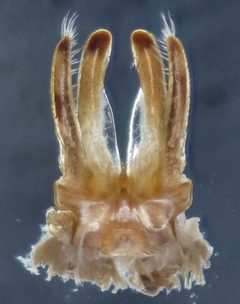
As a , Litiulus contains only one , Litiulus alaskanus. Identification to genus level requires examination of and other male reproductive structures characteristic of Parajulidae. Within its range, it may be distinguished from other julid millipedes by its specific associations and geographic distribution.
Images
Habitat
Occurs in wet, hypermaritime forested of the northeastern Pacific coastal region. Specifically associated with old-growth evergreen rainforests where fungi grow in abundance. The is characterized by high moisture availability and abundant decaying organic matter supporting fungal growth.
Distribution
to the northeastern Pacific coast of North America. Northern extent in Tlingit territory (southeastern Alaska), southern extent in Haida territory (Haida Gwaii, British Columbia).
Diet
Feeds primarily on fruiting bodies of fungi. Has been observed to consume slime molds on occasion.
Ecological Role
Functions as a fungivore in old-growth rainforest . Consumes fungal fruiting bodies, potentially contributing to nutrient cycling within these hypermaritime forest systems.
More Details
Hardiness
Has been suggested to possess greater physiological hardiness than sympatric , with apparent for harsher and drier conditions.
Etymology
The specific epithet 'alaskanus' refers to Alaska, the region of the type locality. The name Litiulus is of unclear derivation.