
Phryganea
Linnaeus, 1758
giant caddisfly, giant caddisflies
Species Guides
2- Phryganea cinerea(Rush Sedge Caddisfly)
- Phryganea sayi(Say's Giant Caddisfly)
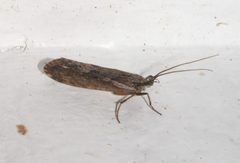
Phryganea is a of large in the Phryganeidae, commonly known as giant caddisflies. The genus contains approximately 25–30 described distributed across the northern hemisphere, with particularly high diversity in Europe and Asia. Larvae construct portable cases from plant material and are among the most primitive of the tube-case-building caddisflies. are notable for their relatively large size compared to other caddisfly genera.

Pronunciation
How to pronounce Phryganea: /frɪˈɡeɪniə/
These audio files are automatically generated. While they are not always 100% accurate, they are a good starting point.
Identification
Distinguished from other Phryganeidae by larger size and specific wing venation patterns including the arrangement of crossveins in the . Larvae identified by case construction using spiral plant fragment arrangement rather than transverse or irregular patterns seen in related . Setae distribution and on larval body segments differs from Nemotaulius and other phryganeid genera. Adults may be confused with other large such as Hagenella or Oligostomis, but Phryganea typically shows more complete wing venation and distinct genital armature in males.
Images
Habitat
Larvae inhabit lentic (still water) environments including lakes, ponds, marshes, and slow-moving sections of rivers and streams. Associated with macrophyte beds, submerged woody debris, and detrital accumulations in shallow water. are found in riparian vegetation near larval .
Distribution
Holarctic distribution spanning the northern hemisphere. Documented from Europe, Asia, and North America. In North America, approximately 13 occur, with records from Vermont and other northern states. European records include Denmark, Norway, and Sweden.
Seasonality
typically occurs during spring and summer months, with timing varying by latitude and . Larval development spans multiple seasons in temperate regions.
Life Cycle
Holometabolous development with , larva, pupa, and stages. Larval stage is aquatic and prolonged, lasting one to several years depending on and environmental conditions. Larvae construct and inhabit portable cases throughout development, enlarging cases as they grow. occurs within a sealed case attached to submerged substrate. Adults are terrestrial and short-lived, functioning primarily in .
Behavior
Larvae exhibit tactile sensitivity mediated by setae distributed across body segments. Mechanical stimulation of setae (on , , , legs) generally elicits movement toward the stimulus, while stimulation of setae (on last three abdominal segments and anal ) elicits movement away from the stimulus. These responses have been observed in feeding and social interaction contexts. Larvae are case-building and remain within constructed tubes during most activities.
Ecological Role
Larvae function as in aquatic , processing coarse particulate organic matter (plant detritus). Cases provide structure for other small . As relatively large-bodied , larvae and represent substantial prey resources for aquatic and terrestrial respectively.
Human Relevance
Occasionally used as bioindicators of water quality in lentic . Larvae of some have been used as fish . may be attracted to lights, occasionally entering buildings near suitable habitats.
Similar Taxa
- NemotauliusAlso in Phryganeidae with case-building larvae, but cases typically constructed with different material arrangement and larvae show milder setal responses to mechanical stimulation.
- HagenellaLarge phryganeid with overlapping distribution, but distinguished by genital and larval case construction patterns.
- OligostomisSimilar large size and preferences, but differs in wing venation details and larval case composition.
More Details
Taxonomic history
Linnaeus established the in 1758. The genus has been variously treated as containing subgenera by some authors, though this classification is not universally accepted. The Catalogue of Life lists Phryganea as both a genus and a subgenus within itself, reflecting historical taxonomic uncertainty.
Sensory biology
Research on Phryganea cinerea has demonstrated that caddisfly larvae, despite poor eyesight, rely heavily on mechanosensory input from setae for environmental perception and behavioral responses. Regional differences in setal sensitivity suggest functional specialization across body segments.