
Phryganea sayi
Milne, 1931
Say's Giant Caddisfly, Say's Giant Casemaker
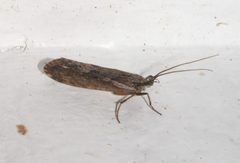
Phryganea sayi is a of giant caddisfly in the Phryganeidae, commonly known as Say's Giant Caddisfly or Say's Giant Casemaker. It is one of the larger caddisfly species in North America. Like other members of Phryganeidae, the larvae construct portable cases from plant material. The species was described by Milne in 1931.
Pronunciation
How to pronounce Phryganea sayi: /ˌfrɪɡəˈniːə ˈseɪ.aɪ/
These audio files are automatically generated. While they are not always 100% accurate, they are a good starting point.
Identification
Distinguished from other Phryganea by genitalic characters (male claspers, female segment IX) requiring microscopic examination. The specific epithet honors Thomas Say, early American entomologist. Field identification to species level is difficult without specimen examination; separation from other North American Phryganea species requires reference to original description or keys.
Images
Habitat
Aquatic larval stage occurs in freshwater including lakes, ponds, and slow-moving streams with abundant submerged vegetation for case construction materials. are terrestrial but remain near water bodies.
Distribution
North America. GBIF records confirm presence in the with distribution records from North America. Specific range details within North America are not well documented in available sources.
Seasonality
period is not precisely documented in available sources. Most Phryganea have adults active during warmer months, but specific for P. sayi requires local observation records.
Life Cycle
Complete with , larva, pupa, and stages typical of Trichoptera. Larval stage is aquatic and case-bearing. occurs within the larval case or in a pupal case constructed by the larva. Specific developmental details for this are not documented in available sources.
Behavior
Larvae are case-bearers that drag their constructed cases along substrates while feeding. Cases provide protection and camouflage. are or and attracted to light. Specific behavioral observations for P. sayi are not available in provided sources.
Ecological Role
Larvae function as in freshwater , processing coarse plant material. They serve as prey for fish and other aquatic . may contribute to pollination or serve as prey for terrestrial predators, though specific ecological studies on this are not documented.
Similar Taxa
- Other Phryganea speciesCongeneric in North America share large size and case-making habit; require genitalic examination for reliable identification.
- Other Phryganeidae genera members share case-making but differ in case construction style, larval , and genitalic structure.
More Details
Nomenclature
The specific epithet 'sayi' honors Thomas Say (1787-1834), pioneering American naturalist and entomologist often called the father of American entomology.
Taxonomic note
The Phryganea is the type genus of Phryganeidae and order Trichoptera. -level in this genus requires careful examination of genitalic characters.
Sources and further reading
- BugGuide
- Wikipedia
- GBIF taxonomy match
- iNaturalist taxon
- NCBI Taxonomy
- From Caterpillars to Butterflies to Chronic Pain Research | Bug Squad
- Bruce Hammock: From ResearchIng Insect Science to Researching Autism and Schizophrenia | Bug Squad
- Bug Eric: Stop Saying the Monarch is a "Gateway Species" for an Appreciation of Other Insects
- Bug Eric: Spider Sunday: Funnel-web Wolf Spiders
- Termite Experts Attempt to Solve Taxonomic Cold Cases
- New comment policy | Beetles In The Bush