
Lepidostoma
Bremek.
Species Guides
11- Lepidostoma cascadense(bizarre caddisfly)
- Lepidostoma cinereum
- Lepidostoma griseum
- Lepidostoma hoodi(Hood River Bizarre Caddisfly)
- Lepidostoma jewetti
- Lepidostoma podagrum
- Lepidostoma reosum
- Lepidostoma sommermanae
- Lepidostoma stigma
Lepidostoma is a of in the Lepidostomatidae comprising over 150 described . The genus is notable for the distinctive case-building of its larvae, which construct portable cases from plant materials, primarily leaf panels in later instars. Larvae are that process allochthonous organic matter in freshwater streams. The genus has a broad geographic distribution including North America, Europe, Asia, and Africa.
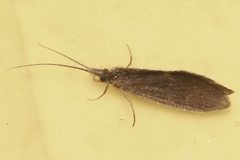
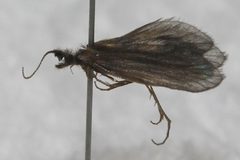
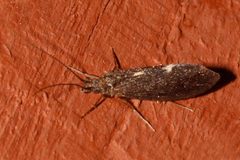
Pronunciation
How to pronounce Lepidostoma: //ˌlɛpɪˈdɒstəmə//
These audio files are automatically generated. While they are not always 100% accurate, they are a good starting point.
Identification
Larvae of Lepidostoma are distinguished from other caddisfly by their rectangular leaf-panel cases in later instars, with panels arranged in a single row per side and interlocking convex-concave edges. Cases are square in cross-section when mature. Early instar sand-grain cases are less distinctive; identification to genus requires examination of case construction pattern and transition to leaf materials. -level identification of larvae requires detailed morphological examination of capsule, , and other sclerotized structures.
Images
Habitat
Freshwater streams and rivers, particularly in woodland and forested areas with allochthonous leaf litter inputs. Larvae occupy benthic including riffle-pool sections, debris accumulations, and small pools with leaf litter and woody debris. Some occur in hygropetric habitats (thin water films on rock surfaces) in mountain areas.
Distribution
Widespread across the Northern Hemisphere and Africa. Documented from North America (USA, including Oregon), Europe (Germany, Greece, Iberian Peninsula), Asia (Japan, Thailand), and Africa (Ethiopia).
Seasonality
Larval activity varies by and latitude. In temperate regions, larvae are present year-round with peak densities in summer months. timing differs among species: some species pupate in spring (March-June), others show rapid growth in early summer (June-July) with correspondingly later pupation. At least one tropical species (L. abruptum) is non-seasonal.
Diet
; feeds on allochthonous organic matter, particularly conditioned leaf material. Consumption rates increase with temperature, food quantity, and conditioning time of leaves. Alder leaves have been identified as a preferred food source for at least one .
Life Cycle
Holometabolous with aquatic larval and pupal stages. Larvae pass through five instars. Case construction changes with instar: sand-grain cases in early instars, transition to leaf-panel construction in third instar, with fifth instar cases composed entirely of leaf panels. Prior to , larvae modify cases by attaching additional panels with long axes arranged along the case rather than across it. Pupation occurs within the case. timing varies by and geography.
Behavior
Larvae construct portable cases using silk to bind collected materials. When removed from their case, fifth instar larvae first rebuild a sand-grain case before constructing a leaf-panel case. Under stress or in response to microplastic , larvae may construct emergency cases—temporary, loosely connected shelters—before building more durable portable cases. Case building activity typically ceases after approximately 48 hours of material collection. Larvae cut leaf panels with and shape them by chewing around the edges.
Ecological Role
Important primary consumer and processor of coarse particulate organic matter in headwater stream . Contributes to nutrient cycling and energy flow through leaf litter breakdown. High consumption rates combined with low assimilation result in significant fecal production, generating fine particulate organic matter that supports collector-gatherer functional feeding groups. Serves as prey for aquatic . Case-building activity influences sediment dynamics.
Human Relevance
Used as bioindicator organisms for stream health and water quality assessment. Larvae have been utilized in studies of microplastic in aquatic environments, demonstrating incorporation of synthetic particles into cases with negative consequences for case stability and survival. Nutritional composition of larvae has been analyzed for potential use in animal feed or other applications.
Similar Taxa
- Other Lepidostomatidae generaLepidostoma is distinguished within Lepidostomatidae by the characteristic rectangular leaf-panel case construction; other may use different materials or case architectures
- Other Integripalpia caddisfiesLepidostoma cases differ from the spiral or cylindrical cases of many other Integripalpia; the square cross-section and interlocking panel arrangement is distinctive
More Details
Microplastic interactions
Laboratory studies demonstrate that Lepidostoma basale larvae actively incorporate PVC and PET microplastics into cases when available. Case stability decreases with increasing microplastic content, potentially increasing risk and displacement by currents. Larvae initially prefer microplastics before switching to mineral grains, suggesting sensory or behavioral attraction to novel materials.
Species diversity
The contains over 150 described with ongoing taxonomic work, including recent descriptions of six new species from Japan. Larval has been described for relatively few species; many species are known only from .
Sources and further reading
- BugGuide
- Wikipedia
- iNaturalist taxon
- NCBI Taxonomy
- Catalogue of Life
- Case building behaviour of the caddis fly larva, Lepidostoma hirtum
- PVC and PET microplastics in caddisfly (Lepidostoma basale) cases reduce case stability
- Population Dynamics, Bioenergetics, and Role of Lepidostoma Quercina Ross (Trichoptera: Lepidostomatidae) in an Oregon Woodland Stream
- Description of the larva of Oecetis mizrain Malicky & Graf, 2012 (Trichoptera, Leptoceridae) and Lepidostoma scotti (Ulmer, 1930) (Trichoptera, Lepidostomatidae) from Chilimo Forest, Central Ethiopia
- Populations Dynamics and Role of Two Species of Lepidostoma (Trichoptera: Lepidostomatidae) In an Oregon Coniferous Forest Stream
- The larva of Lepidostoma doehleri Malicky 1976 (Trichoptera: Lepidostomatidae) with notes on ecology and a key to larvae for species of the genus in Greece
- <p class="HeadingRunIn"><strong>Six new species of the genus <em>Lepidostoma</em> Rambur (Trichoptera, Lepidostomatidae) from Japan</strong></p>
- Life History of Lepidostoma hirtum in an Iberian Stream and its Role in Organic Matter Processing
- Larval morphology, life cycle and nutritional values of Lepidostoma abruptum Banks 1931 (Trichoptera: Lepidostomatidae) from Lower-Hill Evergreen Forests of Southern Thailand
- Description of the larva of Oecetis mizrain Malicky & Graf, 2012 (Trichoptera, Leptoceridae) and Lepidostoma scotti (Ulmer, 1930) (Trichoptera, Lepidostomatidae) from Chilimo Forest, Central Ethiopia
- Phylogenetic Analysis of the Family Lepidostomatidae (Trichoptera: Integripalpia) Using Whole Mitochondrial Genomes.