
Lepidostoma cascadense
(Milne, 1936)
bizarre caddisfly
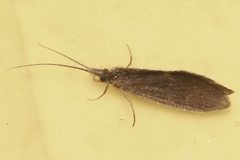
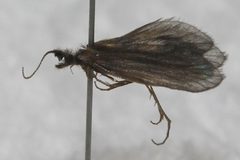
Lepidostoma cascadense is a caddisfly in the Lepidostomatidae native to North America. Larvae function as in stream , processing conifer needles and contributing to leaf litter breakdown. The species exhibits seasonal with occurring in May and June.
Pronunciation
How to pronounce Lepidostoma cascadense: //ˌlɛpɪˈdɒstəmə kæˈskeɪdənsi//
These audio files are automatically generated. While they are not always 100% accurate, they are a good starting point.
Images
Habitat
Coniferous forest streams in Oregon, specifically within riffle-pool sections. Larvae occur within sediments and debris rather than on surfaces.
Distribution
North America; documented from Oregon, USA (Mack Creek, Lane County).
Seasonality
Larvae grow slowly throughout winter; occurs in May and June.
Diet
Conifer needles; larvae are that process large particulate organic matter.
Life Cycle
Larvae grow slowly through winter with in May and June. Maximum larval recorded at 812/m². Instantaneous growth rate of 1.5%/d. Production estimated at 0.31 g·m⁻²·yr⁻¹.
Behavior
Larvae inhabit sediments and debris within streams rather than surface layers.
Ecological Role
that processes conifer needles, contributing significantly to leaf litter processing and making food available to collector in stream . Despite minor relative to other insects, high consumption rates and low assimilation make this species important for nutrient cycling.
Similar Taxa
- Lepidostoma unicolorCo-occurs in same Oregon streams but differs in microhabitat (L. unicolor occurs on debris surfaces vs. L. cascadense within sediments), growth timing (rapid June-July growth vs. slow winter growth), and lower maximum (320/m² vs. 812/m²).