
Limothrips denticornis
(Haliday, 1836)
barley thrips
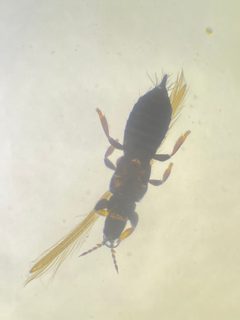
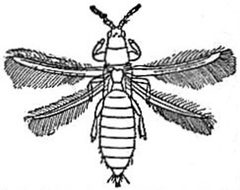
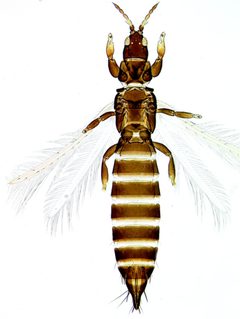
Limothrips denticornis is a grass-dwelling thrips with a Holarctic distribution. It is primarily associated with cereal crops, particularly spring barley, where females deposit within leaf during inflorescence . The species has been documented as an incidental nest of birds and mammals, entering nests passively on grass nest materials. It has been recorded in museum environments as a secondary pest associated with damaged artworks.
Pronunciation
How to pronounce Limothrips denticornis: /lɪˈmoʊθrɪps ˌdɛntɪˈkɔrnɪs/
These audio files are automatically generated. While they are not always 100% accurate, they are a good starting point.
Images
Habitat
Grasslands and cereal fields, particularly spring barley. are deposited within leaf , with strong preference for the flag leaf sheath and middle third of the sheath during inflorescence . Also recorded in bark and atmospheric during periods.
Distribution
Holarctic. Documented from North Dakota and Illinois (USA), Austria, England, Finland, France, and Russia. Recorded in Taiwan as a secondary pest in museum environments.
Seasonality
Peak activity during inflorescence of cereals (Feekes growth stages 10–10.5). Year-round dynamics observed. Spring and autumn peaks in nest infiltration corresponding to summer nesting and winter nest building periods.
Host Associations
- Hordeum vulgare (spring barley) - primary for oviposition and development deposited in leaf , particularly flag leaf sheath
- Poaceae - and nest materialGrass-dwelling ; grass is primary nest material for vertebrate nest associations
- Vertebrate nests (20 species of birds and mammals) - incidental nest Passive infiltration on grass nest material; not associated with nest size, location, or height
Life Cycle
are deposited primarily during inflorescence of cereals, though also detected before and after this period. Development occurs within leaf of host plants. to vertebrate nests occurs via passive transport on nest materials in spring (first summer nesting) and autumn (winter nest building).
Behavior
Females exhibit strong oviposition site selection, with over 85% of found in the two uppermost leaf once inflorescence begins. No significant difference in egg distribution among locations within lower leaf sheaths. Passive invasion of vertebrate nests accounts for 88% of nest occurrences; alternative entry via bark dwelling or atmospheric landing.
Ecological Role
Potential pest of cereal crops; model for studying transport mechanisms of Thysanoptera into vertebrate nests. In museum contexts, may occur as secondary pest in microenvironments created by primary pest damage.
Human Relevance
Documented as a pest of spring barley in agricultural settings. Recorded as a secondary pest in museum collections, where it was found infesting paintings previously damaged by drugstore beetles (Stegobium paniceum).
More Details
Museum infestation context
In a 2021 study of drugstore beetle damage to oil paintings at the Chimei Museum in Taiwan, L. denticornis was identified among secondary pests colonizing the microenvironment created by larval boring in glue paste linings. The thrips were speculated to have strayed from nearby farmland.
Statistical validation of nest associations
A study using over 1,500 nest and 15 wooden boxes with year-round sticky trap monitoring validated that thrips presence is strongly associated with grass nest material rather than nest characteristics such as size, location, or height.
Sources and further reading
- BugGuide
- GBIF taxonomy match
- iNaturalist taxon
- NCBI Taxonomy
- Catalogue of Life
- A Taste for Paste: Beetle Larvae Fond of Museum Paintings' Glue Lining
- THE SPATIAL DISTRIBUTION OF LIMOTHRIPS DENTICORNIS HALIDAY (THYSANOPTERA: THRIPIDAE) EGGS ON SPRING BARLEY
- Cereal pests among nest parasites – the story of barley thrips, <i>Limothrips denticornis</i> Haliday (Thysanoptera: Thripidae)