
Cerastipsocus
Kolbe, 1884
common barklice
Species Guides
2- Cerastipsocus trifasciatus(common barklouse)
- Cerastipsocus venosus(Tree Cattle)
Cerastipsocus is a of barklice in the Psocidae, containing at least 20 described . These insects are commonly found on tree bark and foliage where they feed on lichens, , and other organic detritus. They are notable for producing silk from specialized mouth glands, which they use to create protective webs over and dense . Unlike some related psocids that infest stored products, Cerastipsocus species are harmless decomposers in natural .
Pronunciation
How to pronounce Cerastipsocus: /sɛˌræstɪpˈsoʊkəs/
These audio files are automatically generated. While they are not always 100% accurate, they are a good starting point.
Identification
Distinguished from aphids by large with chewing mouthparts (aphids have small heads with tubular sucking mouthparts). Distinguished from other barklice by wing venation patterns and association with silk web production. Nymphs identified by presence of wing buds rather than the permanent winglessness of booklice in related domestic .
Images
Appearance
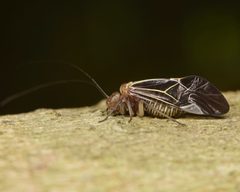
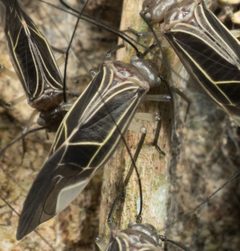
are small, soft-bodied insects with broad bearing large and long . Most have fully developed wings with distinct venation patterns; some exhibit colorful markings. Nymphs are wingless with developing wing buds visible on the . Body shape is somewhat flattened, adapted for moving in tight spaces under bark and leaves.
Habitat
Primarily arboreal; found on bark and foliage of trees and shrubs. Frequently observed on broad-leaved evergreens such as hollies (Ilex spp.). Thrives in humid conditions that support growth of lichens and , such as areas with morning fog and afternoon sunlight.
Distribution
Recorded from Mexico, Nicaragua, Panama, and the United States (including Vermont). Observations indicate presence in Maryland and California. Distribution closely tied to availability of suitable arboreal with lichen growth.
Seasonality
Active during periods of high humidity; observed in Maryland during late summer/early autumn. Activity correlated with favorable conditions for lichen and growth rather than strict seasonal calendar.
Diet
Feeds on lichens, , and other organic detritus on bark and foliage. Has been observed consuming that grows on honeydew excreted by sap-sucking insects such as soft scales.
Host Associations
- Ilex spp. - frequently found beneath broad evergreen leaves
- soft scales (Coccoidea) - indirectassociated via growth on honeydew
Life Cycle
are jelly-bean shaped and deposited in clusters beneath silken webs spun from specialized mouth glands. Nymphs develop through wingless instars with visible wing buds, molting into winged . Both nymphs and adults may be found in .
Behavior
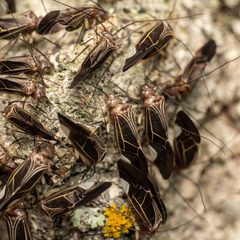
Produces silk from specialized glands in the mouth to create delicate protective webs over and resting sites. Forms dense on bark and foliage. Winged readily disperse when disturbed. Creates extensive silken shrouds that can encase branches and trunks when are dense.
Ecological Role
Decomposer and recycler of organic matter; contributes to nutrient cycling by consuming lichens, , and detritus. Does not harm living plant tissue. Serves as prey for various small arthropods and other .
Human Relevance
Generally harmless; not a pest of stored products or crops. Dense silk production on ornamental plants may be noticeable but causes no damage. Presence indicates healthy, humid growing conditions supporting lichen .
Similar Taxa
- domestic booklice (Liposcelis and related genera)Wingless as , associated with human structures and stored products rather than arboreal ; Cerastipsocus has winged adults and is exclusively found on plants
- aphids (Aphidoidea)Superficially similar in and small size, but aphids have and often visible cornicles; Cerastipsocus has chewing mouthparts, large , and produces silk
Misconceptions
Often mistaken for pests due to dense and conspicuous silk webbing, but does not damage plants. Sometimes confused with aphids, leading to unnecessary concern about plant health.
More Details
Silk production
Among the more notable features of this is the ability to spin silk from glands in the mouth, used to create protective coverings over and communal resting sites. This can produce extensive visible webbing on trees.
Species diversity
The contains at least 20 described , with 27 species listed in some sources, indicating ongoing taxonomic work. Cerastipsocus venosus is one specifically mentioned species in the eastern United States.