
Mesopsocus unipunctatus
(Müller, 1764)
barklouse
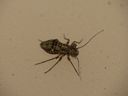
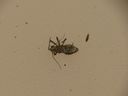
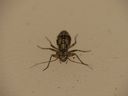
Mesopsocus unipunctatus is a small, flightless barklouse distributed across the Holarctic. It exhibits color with light and melanic morphs, the latter associated with industrial pollution in northern England. The inhabits bark surfaces of diverse trees and shrubs.
Pronunciation
How to pronounce Mesopsocus unipunctatus: //ˌmɛsəpˈsoʊkəs ˌjuːnɪˌpʌŋkˈteɪtəs//
These audio files are automatically generated. While they are not always 100% accurate, they are a good starting point.
Identification
Distinguished from similar barklice by the combination of flightlessness, extremely long (nearly twice body length), and the presence of one or two distinct transverse stripes across the . The color (light vs. melanic morphs) is notable but not unique to this . Separation from congeneric species requires examination of genitalia and other fine morphological details.
Images
Appearance
Small barklouse, 2.5–3.7 mm in body length. Body greyish or light with one or two noticeable transverse stripes across the . Remainder of body erratically mottled with dark markings. nearly twice body length. Wings absent. Two color morphs occur: light forms with disruptive patterning, and melanic forms uniformly dark.
Habitat
Bark surfaces of deciduous and coniferous trees including alder, ash, beech, birch, blackthorn, cedar, elder, elm, gorse, hawthorn, hazel, juniper, maple, larch, oak, pine, sea buckthorn, sycamore, and yew. Also occurs on fruit trees and shrubs (apple, bramble, pear, plum, snowberry), lower hedgerows, and shaded meadows.
Distribution
Holarctic distribution. Europe: Great Britain, Ireland, France, Germany, Belgium, Netherlands, Luxembourg, Denmark, Norway, Sweden, Finland, Iceland, Poland, Czech Republic, Slovakia, Hungary, Romania, Bulgaria, Latvia, Italy, Spain, Switzerland, Austria, Yugoslavia, Armenia. North America: throughout Canada and United States. Asia: Japan, Russia (USSR records). North Africa: Morocco.
Diet
Feeds on bark surface materials; specific dietary components not documented in available sources.
Host Associations
- Alder - bark surface
- Ash - bark surface
- Beech - bark surface
- Birch - bark surface
- Blackthorn - bark surface
- Cedar - bark surface
- Elder - bark surface
- Elm - bark surface
- Gorse - bark surface
- Hawthorn - bark surface
- Hazel - bark surface
- Juniper - bark surface
- Maple - bark surface
- Larch - bark surface
- Oak - bark surface
- Pine - bark surface
- Sea buckthorn - bark surface
- Sycamore - bark surface
- Yew - bark surface
- Apple - bark surface
- Bramble - bark surface
- Pear - bark surface
- Plum - bark surface
- Snowberry - bark surface
Behavior
Flightless. Exhibits industrial melanism: frequency of dark melanic morphs increases in polluted industrial areas where soot darkens tree bark, providing ; light morphs predominate in unpolluted rural areas. Melanic character inherited as Mendelian with separate controlling - and melanisms.
Ecological Role
Member of bark surface ; contributes to nutrient cycling through consumption of bark surface materials.
Human Relevance
Studied as classic example of industrial melanism alongside better-known cases such as the peppered moth (Biston betularia). No documented economic importance as pest or beneficial .
Similar Taxa
- Other Mesopsocus speciesRequire genitalia examination for reliable separation; similar body form and preferences
- Other barklice (Psocoptera)Many share bark ; M. unipunctatus distinguished by combination of flightlessness, extremely long , and abdominal striping pattern
More Details
Industrial melanism genetics
Genetic crosses demonstrate that melanic character is inherited as Mendelian . Separate on the same control melanism of - versus .
Pollution gradient pattern
In Yorkshire, England, frequency of melanics decreases from industrial south to rural north, matching soot deposition patterns on tree bark.