
Attaneuria ruralis
(Hagen, 1861)
Giant Stone, Enigmatic Stone
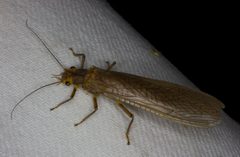
Attaneuria ruralis, commonly known as the Giant Stone or Enigmatic Stone, is a in the Perlidae. It was historically documented from larger rivers in Ohio but has not been collected in the last 50-60 years, raising concerns about local extinction. The species possesses a long of 1-2 years, which increases its vulnerability to loss. Its distribution extends across the southeastern and midwestern United States.
Pronunciation
How to pronounce Attaneuria ruralis: //ˌætəˈnjʊəriə ˈrʊərəlɪs//
These audio files are automatically generated. While they are not always 100% accurate, they are a good starting point.
Images
Habitat
Larger rivers. Historical records from Ohio indicate occurrence in riverine environments.
Distribution
Recorded from Alabama, Arkansas, Florida, Georgia, and Illinois. Historical records exist from larger rivers in Ohio, though the has not been collected there in 50-60 years.
Life Cycle
Long spanning 1-2 years. stages are aquatic; are terrestrial.
Ecological Role
Stoneflies serve as bioindicators of river water quality and general landscape disturbance. Their presence indicates relatively healthy aquatic .
Human Relevance
Anglers model fishing flies after stoneflies. The ' apparent disappearance from Ohio rivers highlights conservation concerns for aquatic insect diversity.
More Details
Conservation Status
Considered potentially extirpated from Ohio based on lack of collections for 50-60 years. Its long (1-2 years) increases risk of local extinction.
Research Significance
Included in the first statewide assessment of diversity in Ohio (2012), which used over 30,000 specimens from 18 regional museums plus new sampling. The study aims to predict distributions and climate change effects on environmentally sensitive insects.