
Perlidae
Latreille, 1802
Common Stoneflies
Subfamily Guides
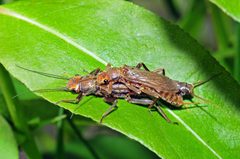
2is a large of stoneflies comprising over 1,100 described across more than 50 . The family is distributed worldwide except for Antarctica and parts of Africa, with highest diversity in eastern North America and Asia. Larvae are aquatic inhabiting cool, clear freshwater systems and serve as sensitive bioindicators of water quality. are summer-emergent, active, and attracted to light sources.
Pronunciation
How to pronounce Perlidae: /ˈpɛr.lɪˌdiː/
These audio files are automatically generated. While they are not always 100% accurate, they are a good starting point.
Identification
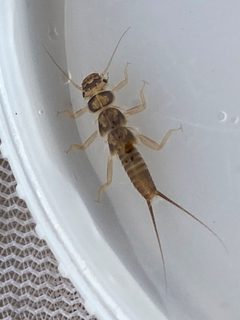
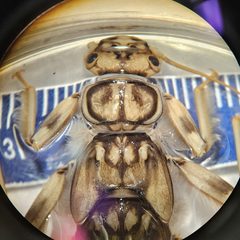
Distinguished from other by combination of: thoracic and abdominal gills in nymphs; engulfer- feeding ; preference for cool, clear, medium to large streams. Specific -level identification requires examination of wing venation, genitalia, and other detailed morphological features.
Images
Habitat
Primarily lotic (flowing water) and lentic erosional environments. Found in cool, clear medium-sized to large streams; occasionally in larger, warm rivers carrying silt. Requires cold, clean, well-oxygenated freshwater conditions.
Distribution
Worldwide distribution except Antarctica and parts of Africa. Highest in eastern North America and Asia. Present in temperate and tropical regions including Northern Europe, Southeastern Europe, East Tropical Africa, Indian Subcontinent, and Malesia.
Seasonality
emerge in summer. Complete spans one to three years depending on and environmental conditions.
Diet
Nymphs are engulfer- consuming all types of . Very young larvae function as collector-gatherers before transitioning to predatory feeding.
Life Cycle
Hemimetabolous development with aquatic larval stage. Lifespan ranges from one to three years. Nymphs are aquatic; are terrestrial and short-lived, emerging in summer to reproduce.
Behavior
Nymphs are capable of rapid movement in stream substrates. In stagnant conditions, nymphs perform vertical body movements to actively ventilate gills. are highly active and attracted to artificial light sources. Extremely sensitive to environmental changes and pollution.
Ecological Role
Nymphs function as and contribute to nutrient cycling and energy flow in freshwater . Serve as critical bioindicators of ecosystem health due to strict requirements for clean, cold, oxygenated water. Very young larvae contribute to detritus processing as collector-gatherers.
Human Relevance
Used extensively in biomonitoring programs to assess water quality and stream health. Sensitivity to pollution makes them valuable indicators of environmental degradation. may be attracted to lights near water bodies.
Similar Taxa
- PerlodidaeAnother ; distinguished by different gill arrangements and generally smaller body size in nymphs.
- ChloroperlidaeGreen stoneflies with reduced gill structures; nymphs possess more prominent thoracic and abdominal gills.
More Details
Gene Rearrangements
First reported gene rearrangements in the order Plecoptera were identified in (Acroneuriinae ), specifically in Hemacroneuria ovalis and Hesperoperla pacifica. Mitogenomes show conserved composition with ND6 evolving faster than COI.
Phylogenetic Relationships
Molecular supports monophyly of tribes Claasseniini, Neoperlini, and Kiotinini, and Perlinae. Tribal relationships reconstructed as (((Perlini + Neoperlini) + Claasseniini) + Kiotinini) + Acroneuriini.