
Attaneuria
Ricker, 1954
Enigmatic Stone
Species Guides
1- Attaneuria ruralis(Giant Stone)
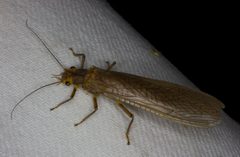
Attaneuria is a of stoneflies in the Perlidae, containing only the Attaneuria ruralis. The genus was established by Ricker in 1954. The single species, commonly known as the Enigmatic Stone, has not been collected in Ohio for 50–60 years despite historical records from larger rivers in that state. Like other Perlidae, members are aquatic as immatures and terrestrial as .
Pronunciation
How to pronounce Attaneuria: //æ.təˈnɪu̯.ri.ə//
These audio files are automatically generated. While they are not always 100% accurate, they are a good starting point.
Identification
Attaneuria ruralis may be distinguished from other Perlidae by its historical association with larger river systems rather than small streams. No specific morphological distinguishing features are documented in the provided sources.
Images
Habitat
Larger river systems, based on historical records from Ohio.
Distribution
Recorded from Alabama, Arkansas, Florida, Georgia, and Illinois. Historical records from Ohio, though the has not been collected there in 50–60 years.
Life Cycle
The Attaneuria ruralis has a long of 1–2 years, which increases its risk for local extinction.
Ecological Role
As a , it functions as a bioindicator of water quality. Its absence from historically occupied sites suggests significant environmental change.
Human Relevance
Stoneflies are used by anglers as models for dry and wet flies. The Enigmatic Stone has served as a case study for prioritization in conservation planning due to its apparent regional disappearance.
Similar Taxa
- Other Perlidae generaAttaneuria is distinguished by its status and historical preference for larger river , whereas most Perlidae inhabit smaller streams.
More Details
Conservation Status
Over 17% of Ohio are considered rare. Attaneuria ruralis exemplifies this pattern, with no confirmed collections in 50–60 years despite historical presence in larger Ohio rivers. Its long 1–2 year increases vulnerability to local extinction.
Research Significance
The Enigmatic Stone was specifically mentioned in the first statewide assessment of Ohio diversity (DeWalt et al., 2012) as a of conservation concern due to its apparent disappearance from the state.