
Acroneuria carolinensis
(Banks, 1905)
Carolina Stone
Acroneuria carolinensis, commonly known as the Carolina stone, is a predatory in the Perlidae. It has a with from late May through mid-July. Nymphs undergo an ontogenetic shift, moving from leaf packs in slow water as small instars to cobble substrates in riffles as they grow larger. are short-lived, do not feed, and are attracted to lights. The functions as a top in stream .
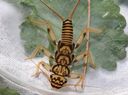
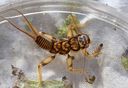
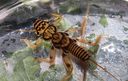
Pronunciation
How to pronounce Acroneuria carolinensis: //ˌækrəˈnjʊriə ˌkærəlaɪˈnɛnsɪs//
These audio files are automatically generated. While they are not always 100% accurate, they are a good starting point.
Images
Habitat
Small nymphs inhabit leaf packs in slow-moving water; larger nymphs occupy cobble substrates in riffle areas of streams. Documented from Panther Creek, a third-order stream in Nicholas County, West Virginia.
Distribution
North America. Specific records from Alabama, Connecticut, Georgia, Kentucky, Maine, and West Virginia.
Seasonality
occurs from late May through mid-July. are attracted to lights at night.
Diet
Predatory; nymphs feed on other aquatic including chironomids, baetid mayflies, and other small prey items. do not feed.
Life Cycle
(one per year). approximately 2-3 weeks. Nymphal development spans approximately 11 months. emerge, mate, and females deposit eggs on emergent rocks and other substrates in the stream.
Behavior
Nymphs exhibit ontogenetic shift from leaf packs to cobble substrates as they grow larger. occurs at dusk and continues into night. are attracted to lights.
Ecological Role
Predatory that functions as a top in stream . Contributes to nutrient cycling through processing of prey and serves as prey for fish and other predators.
Sources and further reading
- BugGuide
- Wikipedia
- GBIF taxonomy match
- iNaturalist taxon
- NCBI Taxonomy
- Catalogue of Life
- Bug Eric: Wasp Wednesday: Anoplius aethiops
- Curious Wasp Specimen Leads Entomologist to Find a First
- species distribution | Blog
- Bug Eric: Wasp Wednesday: Wasp Workshop
- 2019 Arkansas/Oklahoma Insect Collecting Trip iReport | Beetles In The Bush
- sun spiders | Beetles In The Bush
- Life History and Ecology of Acroneuria Carolinensis (Banks) in Panther Creek, Nicholas County, West Virginia (Plecoptera: Perlidae)