
Paraleuctra vershina
Gaufin & Ricker, 1974
summit needlefly
Paraleuctra vershina, commonly known as the summit needlefly, is a of rolled-winged in the Leuctridae. It was described by Gaufin & Ricker in 1974. The species is distributed across western North America, with records from Alaska through western Canada to California and Colorado. As a member of the Leuctridae, it is characterized by wings that roll tightly around the body when at rest.
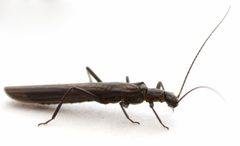
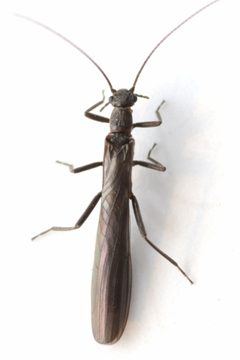
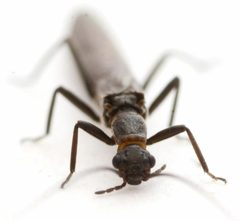
Pronunciation
How to pronounce Paraleuctra vershina: //ˌpærəˈluːktrə vɛrˈʃiːnə//
These audio files are automatically generated. While they are not always 100% accurate, they are a good starting point.
Identification
Members of Paraleuctra can be distinguished from other Leuctridae by genitalic characters, particularly the structure of the male claspers. P. vershina specifically is recognized by features of the male and paraprocts as described in the original . The species name 'vershina' (Russian for 'summit') alludes to its association with high-elevation . Field identification to species level requires examination of these genitalic structures under magnification.
Images
Habitat
The epithet and suggest association with summit or high-elevation environments. GBIF distribution records include mountainous regions: Colorado, California, and the Canadian Rockies (Alberta, British Columbia), consistent with this interpretation.
Distribution
Recorded from Alaska, Alberta, British Columbia, California, and Colorado. The range spans from subarctic Alaska through the western cordillera to the southern Rocky Mountains.
Ecological Role
As a , it occupies a role in freshwater , with nymphs contributing to detritus processing in stream . are terrestrial and do not feed.
Similar Taxa
- Paraleuctra saraCongeneric with overlapping western North American distribution; requires genitalic examination for reliable separation
- Leuctra spp.Same (Leuctridae) and similar rolled-wing resting posture; distinguished by Paraleuctra's reduced wing venation and specific genitalic
More Details
Etymology
The specific epithet 'vershina' derives from Russian вершина, meaning 'summit' or 'peak', referencing the ' high-elevation preference.
Taxonomic history
Described by Arden R. Gaufin and William E. Ricker in 1974 based on material from western North America. The remains in the Paraleuctra without subsequent taxonomic revision.